Pharmaceutical Development: From Molecule to Medicine
Pharmaceutical development is the complex process through which a promising molecule becomes a safe, effective, and marketable medicine. It begins with drug discovery and preclinical research, where scientists identify candidate compounds and evaluate their biological activity, toxicity, and pharmacokinetic properties. Once a candidate is selected, the development phase focuses on transforming that compound into a reproducible pharmaceutical product suitable for clinical trials and, eventually, commercial production.
This stage includes process development, analytical method development, formulation studies, scale-up activities, and stability testing. The goal is not simply to produce the molecule, but to create a robust and controlled manufacturing process that consistently delivers the required quality attributes. In the case of APIs and especially HPAPIs, this challenge becomes more demanding because purity, particle size, polymorphism, and impurity profiles can significantly affect the final product’s safety and performance.
Another important aspect of pharmaceutical development is the growing need for speed and flexibility. The industry is under pressure to reduce time to market, especially for innovative therapies, orphan drugs, and personalized medicines. Contract development and manufacturing organizations (CDMOs) have therefore become strategic partners, offering specialized capabilities and helping pharmaceutical companies manage complexity, containment requirements, and regulatory expectations.
Continuous Manufacturing: A New Industrial Paradigm
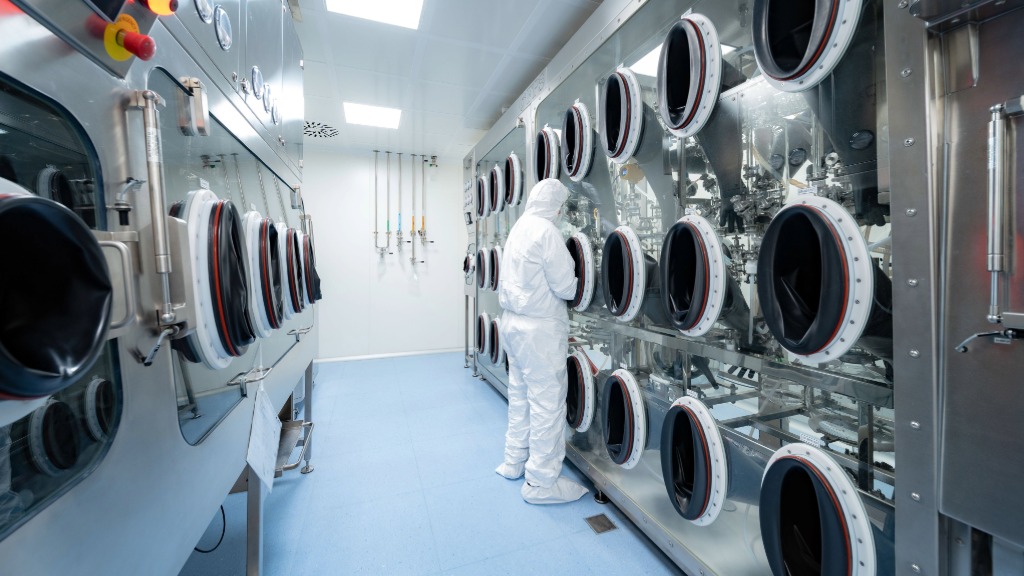
Traditionally, pharmaceutical manufacturing has been based on batch processes, where production occurs in discrete steps with interruptions between them. While batch manufacturing has served the industry for decades, it can be inefficient, time-consuming, and difficult to optimize. Continuous manufacturing offers an alternative model in which raw materials are fed into the process continuously and the finished product is produced in a constant flow.
This approach has attracted increasing interest because it can improve efficiency, reduce waste, shorten production times, and enhance product quality. Continuous manufacturing also supports a more consistent process environment, allowing tighter control over critical parameters and enabling real-time monitoring. Instead of waiting until the end of a batch to test quality, manufacturers can use process analytical technology (PAT) to monitor product attributes during production and make immediate adjustments when needed.
The transition from batch to continuous manufacturing is not merely a technical upgrade; it represents a change in mindset. Companies must rethink development, validation, control strategies, and supply chain planning. Regulatory agencies such as the FDA and EMA have shown support for continuous manufacturing because of its potential to improve quality assurance and supply reliability. However, successful adoption depends on a strong scientific understanding of the process and close collaboration among chemists, engineers, data specialists, and quality teams.
In the context of HPAPIs, continuous manufacturing may become even more relevant in the future as the industry moves toward smaller, more targeted therapies with lower volumes but higher complexity. Flexible and contained continuous systems could provide an ideal solution for this type of production environment.
Digitalization: The Enabler of the Next Pharmaceutical Era
If continuous manufacturing is the new industrial paradigm, digitalization is the enabler that makes it scalable, intelligent, and resilient. Digitalization in pharmaceuticals refers to the integration of digital technologies into research, development, manufacturing, quality, and supply chain operations. It includes data analytics, automation, artificial intelligence, digital twins, electronic batch records, predictive maintenance, and interconnected manufacturing systems.
In pharmaceutical development, digital tools can accelerate experimentation, improve process understanding, and support better decision-making. Advanced modeling and simulation allow scientists to evaluate multiple scenarios before running physical experiments, reducing costs and development timelines. In manufacturing, digital systems can collect and analyze data in real time, enabling more precise control, faster deviation management, and stronger compliance.
Conclusion
APIs and HPAPIs are fundamental to modern medicine, and their importance will continue to grow as therapies become more targeted and sophisticated. At the same time, pharmaceutical development is evolving toward more science-based, flexible, and integrated models. Continuous manufacturing offers a pathway to greater efficiency and control, while digitalization provides the intelligence and connectivity needed to manage complexity.
Together, these trends are reshaping the pharmaceutical landscape. Companies that can combine potent compound expertise, robust development capabilities, advanced manufacturing strategies, and digital innovation will be best positioned to meet future healthcare needs. In an industry where quality, speed, and safety are paramount, the convergence of pharmaceutical development, continuous manufacturing, and digitalization is not just an opportunity—it is becoming a necessity.
Contact
Carlo Lusso
ANGELINI PHARMA | API Business Unit
SALES & CUSTOM SYNTHESIS BUSINESS DEVELOPMENT MANAGER
M +39 335 8128170
Email: carlo.lusso@angelinipharma.com

About the author
Carlo Lusso is responsible for Sales & CDMO of API Business Unit of Angelini Pharma S.p.A., about Europe & Asia. With 30+ years’ experience in Sales and BD Business, he is currently tasked with coordinating chemical development programs and technology transfer in/out related to new in-licensing projects of
Angelini Pharma and custom small molecule APIs / HPAPIs.

Unlocking Innovation Through Industrial Photochemistry

GLOBAL REVOLUTION IN PHYTOPHARMACEUTICALS: How Melisa Farm Decoded Med...

Simplifying CMC: The Value of an Integrated Drug Substance and Drug Pr...
The return of the tool-building chemist

From Fermentation to High Containment: Indena’s Integrated European Pl...

Navigating Pharma’s Forced Supply Chain Revolution

From Trial and Error to Predictive Design: How AI Is Transforming Form...

The Importance of Occupational Health Expertise in HPAPI Manufacturing