
Introduction
Developing robust quality control strategies for cell and gene therapy (CGT) products is a technically demanding process for biopharmaceuticals developers. These advanced therapies have exceptional potential with equally exceptional analytical complexity: heterogeneous active substances, limited early-phase material, evolving regulatory frameworks, and mechanisms of action that often cannot be reduced to a single quantitative assay.
Potency is the analytical tool to link manufacturing and clinical outcome. ICH Q6B is explicit: a potency test, or bioassay, is part of the control strategy for any biological product (1). Indeed, potency assays are bioassays measuring the biological responses in living systems, incorporating two inherent sources of variability: the test system itself, and the complexity of the product being tested. In CGT, complexity is high in comparison with most other drug categories. The active substance may be a population of genetically modified cells with heterogeneous integration profiles, a viral vector with variable infectivity, or a cell population whose therapeutic properties emerge from a combination of surface markers, secretory factors, and differentiation state. The result is significant intrinsic assay variability and real challenges for validation.
Before going further, the distinction between gene therapy and cell therapy matters because it shapes method design. In gene therapy, the therapeutic effect is carried by a genetic element introduced into the patient’s cells. CAR-T (chimeric antigen receptor T-cell) therapies illustrate this well, the cell is the delivery vehicle, but the gene is the therapeutic agent. Cell therapies rely on the native biological properties of the administered cells to produce the clinical effect, without necessarily involving a genetic modification step.
FDA (Food and Drug Administration) and EMA (European Medicines Agency) guidelines acknowledge this. The FDA’s 2011 guidance on potency tests for cellular and gene therapy products (2) and the more recent Potency Assurance draft guidance (3), both recognize that multiple assays may be required and that the testing approach should mature as programs advance.
A two-step potency strategy
A practical starting point is the Analytical Target Profile (ATP), introduced in ICH Q14 (4). The ATP defines what the method needs to measure, what performance is expected, and what range of values is meaningful based on the product’s Critical Quality Attributes (CQAs). Defining the ATP early drives method selection and avoids significant rework as the program advances. EMA’s guideline on potency testing for cell-based immunotherapies reinforces this: evaluating multiple assay options in parallel before committing reduces the risk of a late-stage validation failure (5).
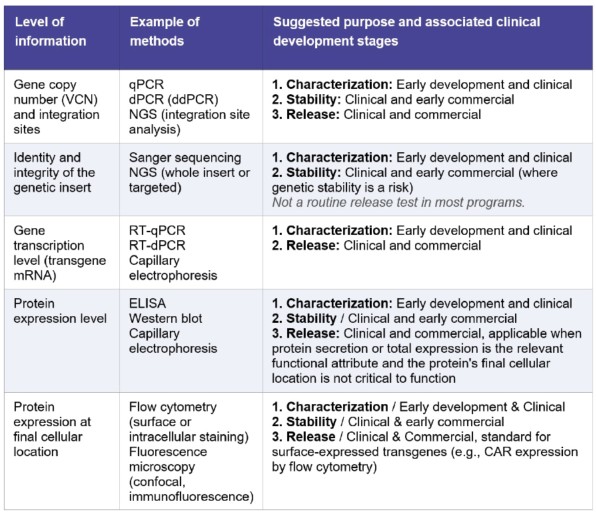
Table 1. summarizes the main analytical approaches at Step 1, organized by the level of information they provide.
Step 1: Is the engineered feature present and expressed?
The first step establishes that the element responsible for the therapeutic effect is present and measurable at the molecular level. For gene therapy products, this means confirming genetic integration, transcription and translation of the expected protein. For cell therapies without genetic modification, it means identifying which cellular attribute carries the therapeutic function and whether it can be measured before proceeding to functional testing.
The choice of method should reflect what is known about the MOA. A high VCN (vector copy number) does not guarantee high mRNA transcription; silencing mechanisms can intervene at the insertion site. Abundant transcript does not always translate into proportional protein production. Step 1 is more straightforward for gene therapy products because their active element can be characterized in molecular terms. For cell therapies, the therapeutic effect often develops from a combination of surface markers, secreted factors, and differentiation state, so the assay set needs to reflect that complexity.
A recurring challenge is establishing what constitutes an adequate expression level. Without prior data from the same product or platform, the limits are unclear. The practical response is to start generating Step 1 data from the earliest manufacturing runs, building the dataset that will eventually secure acceptance criteria at later phases.
Step 2: Is the engineered feature functional in a biological context, representative of the expected clinical activity?
Step 2 addresses what regulators and clinicians ultimately care about: does the product do what it is supposed to do? The regulatory expectation is clear. EMA/CHMP/BWP/532517/2008 defines potency as the “quantitative measure of biological activity based on an attribute of the product which is linked to the relevant biological properties”, which should “ideally reflect the biological activity in the clinical situation”. FDA definition under 21 CFR 210.3(b)(16)(ii) is consistent (6, 7).
The assay formats available differ by product category. For cell therapies: cytotoxicity assays, activation marker panels, cytokine secretion assays, and differentiation markers. For gene therapy: transgene activity assays, reporter assays, enzymatic activity measurements, and target knockdown quantification. The starting point for the design is the MOA mapping, meaning identifying the minimum functional feature fully representative of the product’s clinical mechanism. The cellular model chosen for the assay should derive from the tissue or cell type targeted therapeutically, or if this is not possible it should be scientifically justified.
Reference standard strategy is also established at this step. ICH Q6B (1) states that results should be expressed in units of activity relative to a reference standard. For most CGT products, international standards do not yet exist, making an in-house primary reference standard the norm. Establishing and selecting a representative batch, characterizing it, and defining a replenishment plan cannot be postponed to Phase III without significant risk.
How the two steps connect
Step 1 establishes that the active element is present at the right level. Step 2 establishes that the product produces a biological consequence consistent with its MOA. Together they form a control strategy that is both analytically defensible and interpretable by regulators. A meaningful relationship between Step 1 readouts (VCN, transgene expression, surface marker density), and Step 2 functional activity strengthens the overall structure of the program and provides a rational basis for acceptance criteria. It also supports comparability assessments after process changes: if a manufacturing modification shifts a Step 1 record without affecting the Step 2 functional output, the data can be used to demonstrate the change is not potency-relevant.
Phase-appropriate progression
Potency strategy is evolving with the drug development process. In research and pre-IND (Investigational New Drug Application) phases, the emphasis is on exploration: running multiple Step 1 methods in parallel, generating preliminary Step 2 assay data, and defining the ATP. At Phase I, at least one expression assay should be qualified for release and at least one functional assay demonstrating biological activity is expected; full validation is not yet required, but method suitability is. Phase I is also when the Step 1 to Step 2 correlation should be confirmed, and the primary potency assay format committed to. Phase II is when partial validation begins, and acceptance criteria are drafted from accumulated manufacturing data. By Phase III and BLA (Biologics License Application) or MAA (Marketing Authorisation Application) submission, both the expression assays and the functional assay must be fully validated, with defined acceptance criteria, reference standard, and robustness data.
A useful intermediate stage exists between development and formal validation: a qualified method, sufficiently controlled to support pre-clinical non-GMP testing. This generates early performance data, identifies assay weaknesses before the formal validation campaign, and reduces validation failure risk. Formal validation under ICH Q2(R2) (8) can then be implemented once critical parameters are optimized, ideally through DoE (Design of Experiments) approaches, and qualification runs confirm the method is performing according to the ATP.
Regulatory expectations
Regulatory reviewers focus on four consistent areas:
Intended use and decision rules: what is the assay used for, what decision follows from the result?
Controls and system suitability: are positive and negative controls included, are variability limits defined?
Reference material strategy: is there an established reference standard, what is the replacement plan?
Change control impact on potency: is there a defined comparability protocol when manufacturing changes are introduced?
These are not formalities they reflect what matters for patient safety and batch-to-batch consistency.
Conclusion
Potency in CGT becomes manageable when treated as a planned strategy rather than a compliance exercise. The two-step structure, combining expression-based evidence with a MOA-representative functional readout, provides a practical structure for building that strategy from early development through to BLA or MAA submission. The most important principle is to start early: defining the ATP before method development begins, generating Step 1 data from the first manufacturing runs, and building the Step 1 to Step 2 correlation dataset over time.
For programs managing multiple analytical workstreams in parallel or navigating the transition from research-grade to GMP-ready methods, specialized CRO (Contract Research Organization) support with established CGT potency expertise can significantly reduce development risk without compromising analytical rigor. Beyond potency, a complete control strategy for viral vector-based CGT products must also address vector safety attributes, including the detection of replication-competent lentivirus (RCL) and replication-competent adeno-associated virus (rc-AAV), which represent additional analytical and regulatory challenges fundamental to any robust gene therapy quality framework.
References and notes
- International Council for Harmonisation (ICH). Q6B: Specifications: Test Procedures and Acceptance Criteria for Biotechnological/Biological Products. 1999. Available from: https://database.ich.org/sites/default/files/Q6B%20Guideline.pdf
- Food and Drug Administration (FDA). Guidance for Industry: Potency Tests for Cellular and Gene Therapy Products. 2011. Available from: https://www.fda.gov/files/vaccines%2C%20blood%20%26%20biologics/published/Final-Guidance-for-Industry–Potency-Tests-for-Cellular-and-Gene-Therapy-Products.pdf
- Food and Drug Administration (FDA). Draft Guidance: Potency Assurance for Cellular and Gene Therapy Products. 2023. Available from: https://www.fda.gov/regulatory-information/search-fda-guidance-documents/potency-assurance-cellular-and-gene-therapy-products
- International Council for Harmonisation (ICH). Q14: Analytical Procedure Development. Final version, November 2023. Available from: https://database.ich.org/sites/default/files/ICH_Q14_Guideline_2023_1130.pdf
- European Medicines Agency (EMA). Guideline on potency testing of cell based immunotherapy medicinal products for the treatment of cancer, Revision 1 (EMA/CHMP/BWP/271475/2014). 2016. Available from: https://www.ema.europa.eu/en/documents/scientific-guideline/guideline-potency-testing-cell-based-immunotherapy-medicinal-products-treatment-cancer-revision-1_en.pdf
- European Medicines Agency (EMA). Guideline on development, production, characterisation and specification for monoclonal antibodies and related products. EMA/CHMP/BWP/532517/2008. Available from: https://www.ema.europa.eu/en/documents/scientific-guideline/guideline-development-production-characterisation-and-specification-monoclonal-antibodies-and-related-products-revision-1_en.pdf
- Code of Federal Regulations. FDA. 21 CFR 210.3(b)(16)(ii). Available from: https://www.ecfr.gov/current/title-21/chapter-I/subchapter-C/part-210/section-210.3
- International Council for Harmonisation (ICH). Q2(R2): Validation of Analytical Procedures. Final version, November 2023. Available from: https://database.ich.org/sites/default/files/ICH_Q2%28R2%29_Guideline_2023_1130.pdf

The return of the tool-building chemist

From Fermentation to High Containment: Indena’s Integrated European Pl...

Navigating Pharma’s Forced Supply Chain Revolution

Unlocking Innovation Through Industrial Photochemistry

From Trial and Error to Predictive Design: How AI Is Transforming Form...

APIs, HPAPIs and the Future of Pharmaceutical Development

The Importance of Occupational Health Expertise in HPAPI Manufacturing

GLOBAL REVOLUTION IN PHYTOPHARMACEUTICALS: How Melisa Farm Decoded Med...