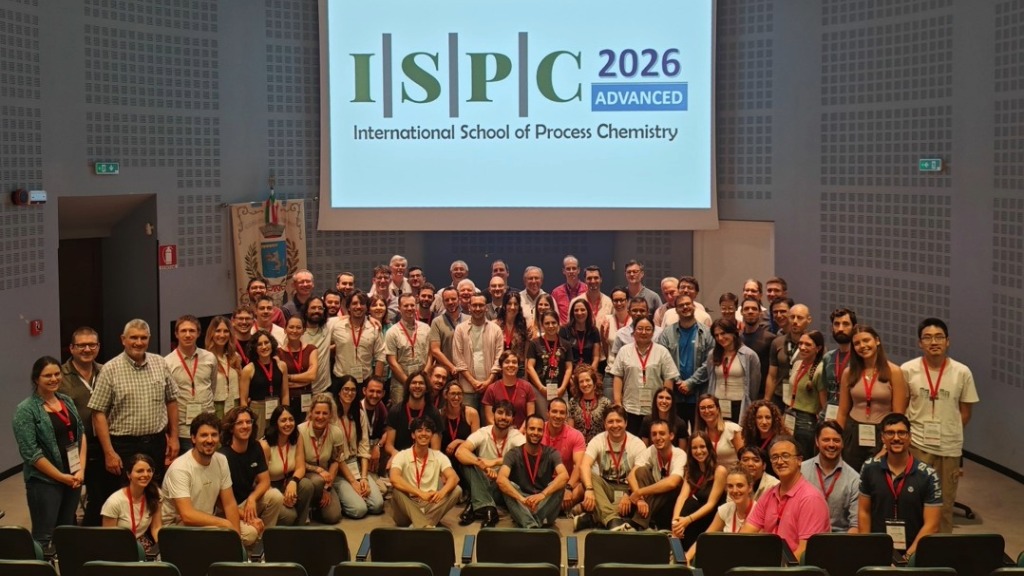
ISPROCHEM (International School of Process Chemistry) is an advanced training school promoted by the Organic Chemistry Division of the Italian Chemical Society (Società Chimica Italiana) and organized by the Department of Chemistry at the University of Milan. Now in its ninth edition, the school is dedicated to the training of young researchers and professionals pursuing careers in the pharmaceutical and chemical industries. Its mission is to provide participants with the fundamental knowledge and practical skills required to address the challenges of modern process chemistry, while fostering dialogue between academia and industry in a stimulating international environment.
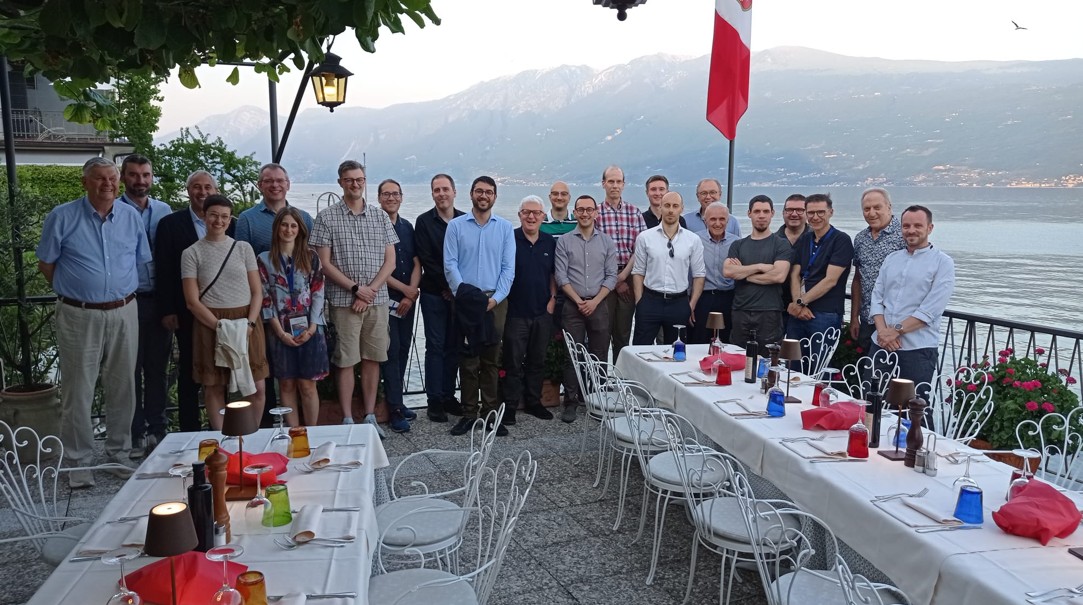
Held in the picturesque setting of Gargnano on Lake Garda, the school offers an intensive educational program combining lectures, case-study discussions, and interactive workshops. The curriculum covers key aspects of process chemistry, from the design of innovative synthetic strategies to the development of robust and sustainable processes, their scale-up, and transfer to industrial manufacturing. Particular emphasis is placed on emerging technologies, artificial intelligence, sustainability, process safety, and the latest advances in pharmaceutical synthesis.
The faculty brings together internationally recognized experts from both academia and industry. For the 2026 edition, participating academic institutions included Université libre de Bruxelles, the University of Graz, University College London, the University of Cambridge, the University of Bologna, the University of Piemonte Orientale, and the University of California. These were joined by leading industrial partners, including Bristol Myers Squibb, Boehringer Ingelheim, Roche, AstraZeneca, Olon, Chiesi, Johnson & Johnson, and Almac. ISPROCHEM 2026 also welcomed approximately 90 participants from Italy, Belgium, the United Kingdom, Switzerland, Austria, and a small number of participants from Asia and America.
The 2026 edition opened with the synthesis & catalysis session, highlighting the role of catalysis in the design of efficient and scalable chemical processes. Eric Simmons (Bristol Myers Squibb) discussed the contribution of transition-metal catalysis to the development of robust and industrially viable synthetic routes. This was followed by Gwilherm Evano (Université libre de Bruxelles), who explored the unique potential of copper catalysis in cross-coupling and radical transformations. The opening day also featured a special historical lecture by Giovanni Appendino (University of Piemonte Orientale), examining how patent disputes have shaped the evolution of intellectual property in chemistry.
The second day focused on chemical and biocatalytic processes. Jonathan Reeves (Boehringer Ingelheim) presented innovative approaches to the large-scale synthesis of pharmaceutical active ingredients, while Serena Bisagni (Roche) showcased examples of biocatalytic processes developed within Roche’s pharmaceutical pipeline. The program continued with a series of industrial case studies presented by representatives from AstraZeneca (Joe Bateman), Olon (Giulia Rainoldi), and Chiesi (Rocco Bussolati).
A distinctive feature of the school was the workshop led by Vittorio Farina (Farinachem), dedicated to the principles of process development for active pharmaceutical ingredients (APIs). Participants also took part in structured problem-solving sessions, working on real-world process chemistry challenges and applying the concepts and methodologies discussed throughout the lectures.
The third day was devoted to emerging technologies and artificial intelligence. Gabriele Laudadio (University of Graz) discussed the opportunities offered by electrochemistry for more sustainable organic synthesis, while Duncan Browne (University College London) introduced the principles of mechanochemistry, highlighting strategies to reduce solvent consumption in chemical processes. The artificial intelligence session included Walter Cabri (University of Bologna), who addressed intellectual property issues related to AI; Laurent Lefort (Johnson & Johnson), who presented a case study on predictive models for catalyst development; and Alexei Lapkin (University of Cambridge), whose lecture focused on the application of digital technologies and machine learning to the optimization of industrial chemical processes.
The final day addressed new chemical entities and sustainability. Alastair Hay (Almac) presented recent advances in peptide chemistry, while Alessandra Tolomelli (University of Bologna) discusseed a case study on innovative sustainable strategies for peptide synthesis. The concluding session featured Brecht Egle (Johnson & Johnson), who focused on process safety in pharmaceutical manufacturing, followed by the closing lecture from Bruce Lipshutz (University of California, Santa Barbara), exploring how inspiration from natural systems can guide the development of more efficient and environmentally responsible synthetic methodologies.
Through its outstanding scientific program, strong emphasis on emerging technologies, and extensive opportunities for interaction between lecturers and participants, ISPROCHEM provides an exceptional platform for professional development and networking for researchers from both academia and industry. The school promotes the exchange of ideas, the establishment of new collaborations, and the development of advanced expertise essential for addressing the future challenges of process chemistry and pharmaceutical development. For additional information on the 2026 School and its topics, visit https://isprochem.unimi.it. We look forward to welcoming you to the next edition of ISPROCHEM which be held in Gargnano from the 23rd to the 27th of May 2027 (the early flyer will be available in December 2026).
Maurizio Benaglia¹, Walter Cabri², Valerio Fasano³
1. Full Professor of Organic Chemistry, University of Milan
2. Full Professor of Organic Chemistry, University of Bologna
3. Associate Professor of Organic Chemistry, University of Milan
Maurizio Benaglia – After PhD at University of Milano (Cozzi-Cinquini) and postdoc at UCSD, San Diego (J. Siegel), he joined the Department of Chemistry at UNIMI, where, since 2015, he is Full Professor of Organic Chemistry. His research interests focus on the development of innovative and sustainable (stereoselective) synthetic methodologies, catalysis and technology driven organic synthesis.
Walter Cabri – After 35 years in the pharma industry, mainly in large (Bristol-Myers Squibb, Fresenius Kabi; Farmitalia Carlo Erba/Pharmacia) and medium size (Sigma Tau; Antibioticos; Indena) companies, Walter joined, as Full Professor of Organic Chemistry, the University of Bologna. The main areas of interest are in the fields of drug discovery, process chemistry, green chemistry, catalysis, and TIDES.
Valerio Fasano earned his M.Sc. from the University of Bologna and his Ph.D. in Chemistry from the University of Manchester (supervised by Prof. Ingleson). After postdoctoral research with Prof. Aggarwal at the University of Bristol, he joined the University of Milan in 2023 as Assistant Professor (with Prof. Passarella) and was promoted to Associate Professor in 2026.
The return of the tool-building chemist
From Fermentation to High Containment: Indena’s Integrated European Pl...

Navigating Pharma’s Forced Supply Chain Revolution
Unlocking Innovation Through Industrial Photochemistry

From Trial and Error to Predictive Design: How AI Is Transforming Form...
APIs, HPAPIs and the Future of Pharmaceutical Development
The Importance of Occupational Health Expertise in HPAPI Manufacturing

GLOBAL REVOLUTION IN PHYTOPHARMACEUTICALS: How Melisa Farm Decoded Med...