The project aims to help SMEs adopt AI and support skilled people into employment
A Birmingham project aiming to help businesses explore practical applications of AI while giving local talent opportunities to apply their skills in the workplace has secured a government grant.
The project, the AI Talent Accelerator to Enhance West Midlands Life Sciences & HealthTech SMEs is supported through TechLocal, part of the UK Government’s TechFirst programme.
It’s being run by FourPlus Immersive, in partnership with RESILIENCE and the University of Birmingham. FourPlus is a UK-based technology company developing AI tools and wearable tech for pharmaceutical manufacturers. RESILIENCE Ltd is a not for profit that is building a talent ecosystem for the life sciences industry.
Local people will gain relevant skills through a Workplace Accelerator and industry hackathons before undertaking 25 paid Real Living Wage placements supporting businesses to adopt AI.
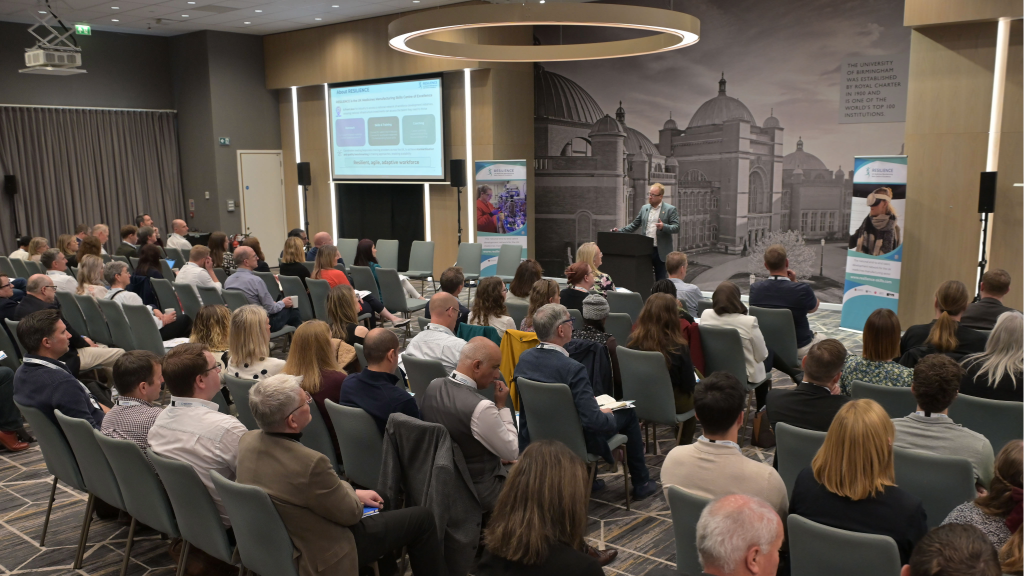
Professor Ivan Wall, co-director of RESILIENCE, said: “The project addresses a gap between the region’s AI talent and businesses that could benefit from those skills. Graduates and researchers may be unfamiliar with career opportunities in life sciences and related industries, while smaller businesses can lack the time, capacity, or experience to identify and recruit the AI expertise they need.
“The partnership will bring these groups together through a combination of workplace preparation, practical business challenges, and paid placements. Its focus includes life sciences and HealthTech, alongside related opportunities in advanced manufacturing and creative technology.”
Participants will be introduced to these sectors, helping them understand how their existing technical skills can address industry needs. Industry-led hackathons, led by the University of Birmingham’s AI in Healthcare Hub will then provide opportunities to work on real challenges set by businesses, allowing participants and employers to explore potential applications of AI.
The project plans to support 25 paid placements at the Real Living Wage and aims to help at least 15 participants move into longer-term employment. Placements will give businesses access to AI capability while enabling participants to gain practical experience and develop relationships with local employers.
Professor Ivan Wall, said: “Around 30% to 54% of UK small and medium-sized enterprises actively use AI, depending on the specific survey and definition you’re looking at. But whether they’re using it in the right way, is a whole other question.
“Together, the partners aim to create a repeatable approach to helping smaller businesses adopt AI and supporting skilled people into employment in the West Midlands.”
About RESILIENCE
RESILIENCE is the UK Medicines Manufacturing Skills Centre of Excellence. It is a £4.3 million programme funded by the Office for Life Sciences, part of the UK Government’s Department for Science, Innovation & Technology, and managed through Innovate UK.
The programme, which started in April 2024, uses virtual reality to train medicine makers in core skills which would be impractical, disruptive, and expensive to gain in the real world.
Partner organisations across the UK delivering the programme include the University of Birmingham, University College London (UCL), Teesside University, Heriot-Watt University and Britest. Professor Ivan Wall of the University of Birmingham and Professor Gary Lye of UCL are co-directors.
As well as bridging the skills gap, Resilience is helping the NHS to meet its long-term goal of achieving net zero. 25% of NHS emissions are in the supply chain, and VR will help the industry deliver net zero medicines manufacturing by reducing laboratory waste.