To survive, the process industry must adopt three pillars: modularization, dark factories, and process intensification. Leveraging continuous flow and MTP automation slashes time-to-market, improves safety, and maximizes efficiency.
 The process industry is at a critical crossroads. Pressured by tightening regulations, shifting global markets, and demanding costs, the chemical and pharmaceutical sectors can no longer rely on legacy batch operations and static infrastructure. Stagnation risks obsolescence. Transforming this vital sector requires focusing innovation on three core pillars: modularization, dark factories, and process intensification.
Modularization and Time-to-Market
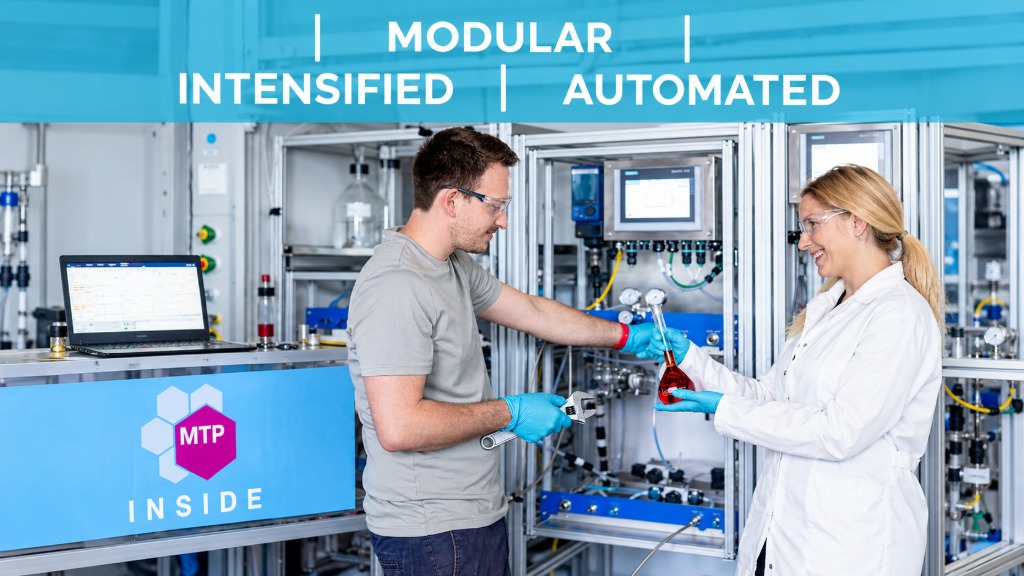
Speed is critical. Traditional monolithic plants tie up massive capital for years before producing a single commercial batch. Modularization solves this by breaking chemical processes down into pre-engineered, standardized Process Equipment Assemblies (PEAs). Utilizing standard automation frameworks like Module Type Package (MTP), these units act as plug-and-play components—rapidly pre-tested, shipped, and assembled on-site. This approach often halves project realization windows and slashes time-to-market. Companies gain unprecedented flexibility to dynamically scale capacity or reconfigure lines, responding to market demands in weeks instead of years.
Dark Factories and Autonomous Production
The ultimate frontier of efficiency is the dark factory—an automated environment requiring minimal human intervention, eliminating the need for personnel lighting and climate control. Powered by intelligent process control and real-time data analytics, these plants run continuously and safely. For chemical and pharmaceutical manufacturing, lights-out digital architectures remove human error from hazardous handling, maximize uptime, and guarantee stable output quality. Combining this automation with continuous flow and modular design yields precision and resilience impossible in manual facilities.
Process Intensification for Reactions
Conventional engineering relies on massive batch vessels where heat transfer and mixing limitations dictate slow reaction rates. Process intensification shatters this paradigm, replacing inefficient equipment with compact, highly reactive systems utilizing continuous flow chemistry and microreactor technology. By drastically shrinking reaction volumes, mass and heat transfer improve, enabling highly exothermic or hazardous reactions to run safely under extreme conditions. This minimizes energy use, reduces waste streams, and tightens product quality control. Transitioning from multi-ton batch tanks to continuous footprints transforms safety risks and high overhead into highly efficient production cycles.
The Bottom Line
The mandate is clear: Survival depends on breaking free from legacy inefficiencies and embracing continuous development, modular agility, and autonomous execution. Integrating these three dimensions secures a highly competitive and sustainable future.