Olon has a long-standing expertise in both fermentation and chemical synthesis. How do you see these two technology platforms evolving together, and why is it important for a CDMO to continue developing both as they play complementary roles in enabling the medicines of today and tomorrow?
Chemistry and biology sit at the heart of everything we do, not as two separate businesses, but as two languages that need to work together. That fluency gives us the flexibility to follow a program wherever the science takes it and to shape a genuinely customized approach around each customer, which matters more than ever with the latest generation of therapies. Fermentation is a good example of that complementarity in practice: across our European network we operate close to 5,000 cubic meters of capacity, giving us a genuine biological route to draw on whenever it’s the right answer for a program, alongside our chemistry platform.
ADCs show that same logic from a different angle. As a customer’s program moves from clinical development towards commercial scale and, potentially, into new indications, having both chemistry and biology in-house is what lets us stay with it, adapting as the needs of the program change.
Olon has recently announced significant investments in both the United States and France. What role do these projects play within your broader growth strategy, and how are they helping you respond to the evolving needs of pharmaceutical and biotech customers?
These investments reflect where we expect the industry to be tomorrow. In the United States, we have just doubled production capacity at our Concord site, strengthening our manufacturing capabilities and our ability to support customers locally. In France, at the same time, we are doubling bioconjugation capacity at Saint-Julien and further building on the link with the payload, linker and payload-linker capabilities we have in Italy. This allows a customer’s ADC program to move across antibody, payload-linker and bioconjugation within our network, drawing on capabilities that already work together today.
More broadly, these investments are about responding to the way customer programs are evolving. A dependable manufacturing presence close to the customer is only part of the equation; the other part is being part of a wider network that can follow a program as it moves across technologies and geographies. Our Concord site puts us ahead of that curve in the United States, while France gives us real depth in biologics and bioconjugates and reinforces our footprint across Europe.
R&D sits at the center of that value chain, which is also why we are expanding our Technology & Innovation Hub, bringing together around 100 scientists across process development, analytics, process safety, chemical reaction engineering and innovation.
We want to be the partner customers can rely on as their programs evolve, with the capabilities to anticipate what they will need next.
Your recent investments in France enhance capabilities in recombinant proteins, monoclonal antibodies and antibody-drug conjugates. ADCs in particular are often cited as one of the most compelling examples of convergence between synthetic chemistry and biotechnology. How does this dual expertise create value for companies advancing next-generation ADC and bioconjugate programs?
ADCs are probably the best example I can give you of what convergence actually means in practice. Developing one draws on biologics know-how, chemistry and specialized conjugation expertise, all working together. Very few companies can bring all of that together within one coordinated platform. For a customer, that matters a lot: they can work with one coordinated team across the different steps, rather than managing several vendors and several handoffs.
One of the industry’s recurring challenges is ensuring a smooth transition from process development to commercial manufacturing. How important is the integration between R&D, scale-up and manufacturing activities in reducing development risk and accelerating timelines?
Every time R&D, scale-up and manufacturing aren’t truly connected, companies lose time and knowledge, sometimes even the original intent behind a molecule’s design and every disconnection is also a quality risk. We’ve organized ourselves so the same technical team, and the same quality standards, follow a project from the lab to the plant floor. That’s what genuinely reduces risk and shortens timelines, whether we’re talking to a first-time innovator or a big pharma company running a global portfolio.
Sustainability is becoming an increasingly important consideration in pharmaceutical manufacturing. How are technologies such as fermentation, biocatalysis and process intensification contributing to more sustainable production models?
Sustainability is a responsibility that sits alongside quality and safety in everything we do.
Green chemistry, biocatalysis, fermentation and flow chemistry all have a role to play replacing hazardous reagents with enzymatic steps, intensifying processes to reduce solvent and energy use, and designing routes that generate less waste in the first place.
What these technologies really do is bring together respect for the environment and respect for the supply chain that carries a molecule to the patient. A process with a smaller carbon footprint is also a more robust and reliable one for the customer relying on it.
Which scientific and manufacturing trends do you believe will have the greatest impact on the CDMO sector over the next five years, and how is Olon positioning itself to support these emerging needs?
We believe the sector’s future will be shaped less by any single technology and more by an organization’s ability to remain steady through change. That starts with quality, it’s the one thing that can never be treated as negotiable, whatever direction a program takes and it has to come paired with real adaptability and operational resilience, plus a deep, current understanding of both the regulatory landscape and the underlying science. Different customers come to us with very different needs, and increasingly those needs sit against a backdrop that keeps evolving. Bringing all of that together is, in our view, the real foundation for supporting the next generation of medicines.
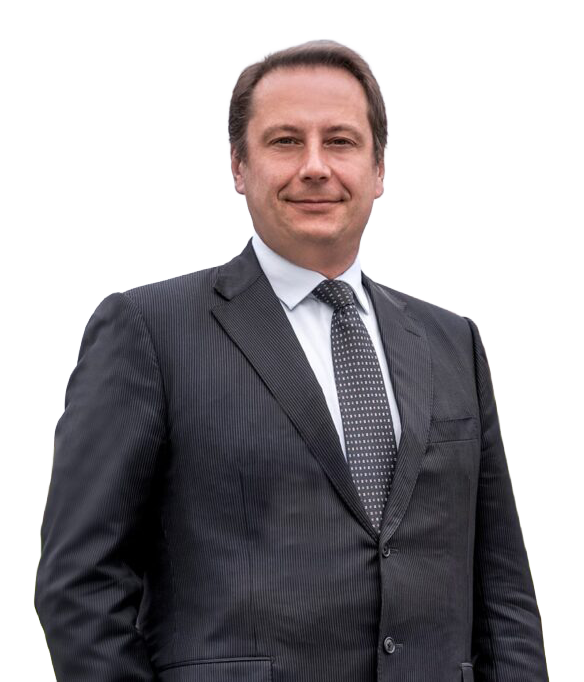
Paolo Tubertini has been Managing Director of Olon Group since 2006, guiding its global expansion and strengthening its position as a leader in pharmaceutical ingredients. Under his leadership, the company has pursued acquisitions worldwide, with a strong focus on advanced technologies, research, and innovation. A key part of his vision has been ensuring business growth while safeguarding employees and investing continuously in scientific excellence. Tubertini began his career with the P&R Group in 2003 and holds a degree in Management Engineering from Politecnico di Milano.
Cheng-Yi Chen, Chief Technology Officer, Asymchem
The return of the tool-building chemist
From Fermentation to High Containment: Indena’s Integrated European Pl...

Navigating Pharma’s Forced Supply Chain Revolution
Unlocking Innovation Through Industrial Photochemistry

From Trial and Error to Predictive Design: How AI Is Transforming Form...
APIs, HPAPIs and the Future of Pharmaceutical Development
The Importance of Occupational Health Expertise in HPAPI Manufacturing