Introduction
The use of PAT in pharmaceutical manufacture has a long history, with its modern regulatory guidance being formulated by the FDA in 2004 (1). In this document, the FDA encouraged a scientific risk-based approach to in-process measurement and control, paving the way for the use of PAT, automated control and digitalisation in pharmaceutical manufacture. Under this framework, PAT has been implemented in several small-molecule unit operations such as continuous blending, granulation, drying and tableting, with its use now common place (2). The FDA framework explicitly ties PAT to process understanding, risk management and integrated systems that supports the principle of quality by design (QbD). These principles were later echoed across the International Council for Harmonisation (ICH) quality guidelines (3).
Biologics manufacture often involves the use of cells, often microbial or mammalian in nature, to generate the product of interest. These cells are grown in large bioreactors, which, after a specified time, typically days, are harvested and further purified using chromatography and filtration, to separate the final product from impurities and byproducts. The deployment of PAT for biologics has been slower than small molecules, in part due to the complexity and number of molecules involved in the process. However, there is a renewed interest in moving from batch manufacture, in which each unit operation is a discrete step, to semi- or fully continuous manufacture, where multiple steps are linked together. This brings a variety of benefits, such as i) a smaller footprint, ii) increased flexibility, productivity and sustainability, iii) the ability to decentralise manufacture, iv) lower costs and manpower and v) the goal of real-time release. PAT is required as an enabling technology for this transition. CPI has been involved in continuous biologics manufacture development.
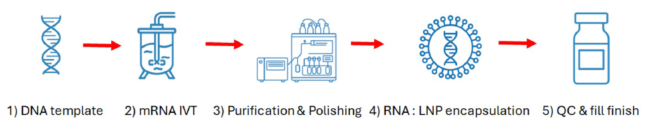
Figure 1. Schematic of the RNA: LNP drug product manufacture process.
For example, from 2017-2020, an Innovate UK funded project, developed an integrated mAb downstream purification platform, using an automated high-pressure liquid chromatography (HPLC) – size exclusion chromatography system (SEC) as PAT to assess product quality at each unit operation (4). Building on the first project, a second, from 2021-2024, developed a fully integrated upstream and downstream mAb purification platform, integrating mid-infra-red spectroscopy PAT to measure and control bioreactor glucose concentration in real time (5).
The Covid-19 pandemic response, starting in 2020, catalysed the use of messenger RNA (mRNA) as a vaccine drug substance. This has led to an explosion in the interest of mRNA as a biologic. CPI has been involved in many RNA projects from that point onwards, including the UK Covid Vaccine taskforce response (6). mRNA manufacture, shares both similarities and differences with more traditional cellular biologics manufacture. For example, the mRNA generation is an enzymatic reaction that does not involve cells, meaning it can be performed more efficiently, at much smaller scales than cellular manufacture. This allows a one litre RNA IVT (in vitro transcription) reaction to generate one million vaccine doses (7). The drug product manufacturing process typically follows five-steps; i) generation of the DNA template of interest, ii) the manufacture of the mRNA drug substance by IVT, iii) mRNA purification and polishing by chromatography or other means, iv) lipid nanoparticle encapsulation, followed by v) fill-finish and QC (see Figure 1).
Concomitant with the rise of mRNA as a biologic, has been the development of off-line analytical assays to measure critical process parameters (CPPs) and critical quality attributes (CQAs) in process and for product release (8),(9). This off-line testing is a major hurdle in the manufacture process and means real-time optimisation and control of the manufacture process is not possible. Identification of PAT that can determine both CPPs and CQAs in-process is therefore required. As with cellular systems, we can also imagine the development of continuous systems, where unit operations with specific PAT sensors, are integrated, although the system could be orders of magnitude smaller, with a full system being able to fit on a benchtop.
One great strength of mRNA as a therapeutic, is the speed in which the drug product can be manufactured. For example, the RNA IVT reaction, where the drug substance is generated, is typically completed in 1 to 4 hours, compared with days for analogous cellular processes. The RNA IVT reaction utilises several components, including an RNA polymerase, which generates the mRNA product from a linearised DNA template and the four ribonucleosides triphosphates (ATP, UTP, GTP and CTP) (see Figure 2. Right).
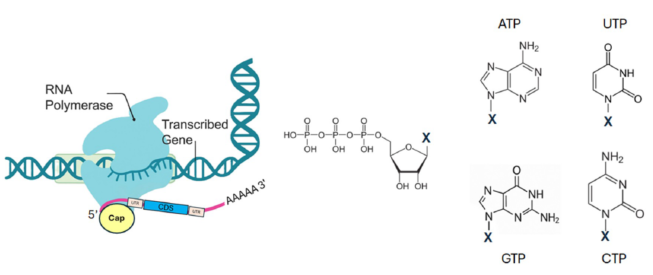
Figure 2. Left – A schematic of mRNA IVT synthesis – Figure adapted from Zhang et al. (10) / Right – The structure of the four RNA nucleosides triphosphates.
Modified ribonucleoside triphosphates have also been used in manufacture to reduce immunogenicity and increase stability (11). A cocktail of other reagents, including RNase inhibitors, MgCl2, a pyrophosphatase and a buffer, perform a variety of functions. The mRNA drug substance is composed of four main parts, i) an mRNA coding sequence for the protein of interest, ii) surrounded by two untranslated regions (UTR’s), plus iii) a 5’ Cap and iv) a 3’ poly(A) tail, the last three elements being essential for translation efficiency, among other things (Figure 2. Left) The 5’ capping analogue can either be co-translationally added in the RNA IVT reaction or enzymatically added after the IVT reaction is complete. Each of the reagents in the IVT need to be optimised to the target RNA sequence. To optimise experimental conditions multiple small scale RNA IVT reaction design-of-experiment (DOE) screens are typically performed, in which individual CPPs are altered, and their effect on corresponding CQAs, such as product titre, measured offline. DOE screens therefore introduce delays into the development and manufacture process. The introduction of PAT can reduce the time and need for off-line testing.
As RNA IVT reactions are enzymatic in nature, whose kinetics can be determined, mechanistic models of these reactions can be created ‘in silico’ (12) (13). Implementation of a mechanistic model allows ‘in silico’ optimisation of CPPs, such as temperature and substrate concentrations, to deliver increases in CQAs, such as increased product titre and integrity with an accompanying decrease in impurities such as double-stranded RNA (dsRNA). The development of mechanistic models of each unit operation can build process digital twins, in which process changes can be examined in a virtual environment before implementation (14). Use of PAT sensors in the bioreactor allows real-time monitoring of CPPs and CQAs to be fed into a hybrid model. If implemented, this would allow real-time optimisation of the model. A robust hybrid model also allows the implementation of complex RNA IVT bioreactor feed strategies to be employed. For example, linking GTP concentration ratio to capping reagent to increase capping efficiency (15), or reducing UTP concentrations to reduce the amount of dsRNA impurity generated (16). The use of PAT also allows the optimal use of expensive raw materials, particularly the capping analogue. Optimal mRNA generation also simplifies purification in the downstream unit operations.
Building on RNA IVT process understanding, we can take a QbD approach, to identify CPPs and CQAs and the effect of one on the other (see Figure 3.).
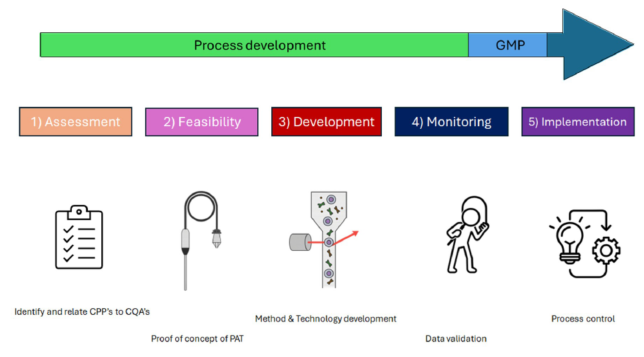
Figure 3. Quality by design schematic for PAT deployment. Figure adapted from HernandezAbad et.al (17).
This is not trivial, as shown by the number of CPPs involved, even in generation of the mRNA drug substance alone (see Table 1). To add further complexity, CPP levels typically change as the RNA IVT reaction progresses, which can influence the CQAs generated.
After the CPP and CQA assessment is complete, the next step is to identify the feasibility of the PAT technology, i.e. which PAT sensor can measure the CPPs and CQAs of interest. PAT deployment in mRNA manufacture is limited at present, although one current example is the use of at-line HPLC to measure nucleotide utilisation and mRNA product formation (18).
Optical spectroscopies are commonly utilised as PAT, due to their ability to be deployed in-line, non-invasively and the speed of data collection. Although chemometric model development is often required to correlated specific CPPs or CQAs to specific spectroscopic changes. Ultra-violet (UV) sensors are commonly used in biologics, due to their low cost and wide availability. For example, commonly being integrated into chromatography skids. Their broad spectral peaks mean they are typically used to determine total biomolecule concentrations (19). Fluorescence has been extensively utilised for protein-based biologics, due to its high sensitivity. Although RNA is not intrinsically fluorescent, fluorescent resonance energy transfer (FRET) of fluorescently labelled nucleotides has been utilised in research to monitor mRNA product formation in real-time (10). Although regulatory difficulties with product labelling make it unlikely to be used in a manufacturing setting. However, fluorescence may still be useful in monitoring protein structure in the mRNA manufacturing process, for example to monitor changes to the polymerase enzyme in the RNA IVT reaction. Other techniques, like Raman spectroscopy, do not require labelling and have been shown to be able to determine a variety of CPPs and CQAs in biologics manufacturing platforms (20). Although there is currently a lack of published literature, there is no reason to think Raman spectroscopy could not similarly be applied to RNA manufacture. Near-infra-red (NIR) and mid-infra-red (MIR) spectroscopy have also been used as biologics PAT (21). Although less spectrally complex than Raman, mid-infra-red (MIR) spectroscopy can be used to determine a variety of CPPs and CQAs for several types of biomolecules e.g. lipids, proteins, nucleic acids (22). Whilst NIR spectra are composed of broad overtone bands, making them less chemically specific than MIR, it can still be useful in monitoring broad spectral changes (23). The emergence of NIR and MIR quantum cascade lasers (QCLs) in PAT sensors offer better signal to noise than traditional globar sources (24). Nuclear magnetic resonance (NMR) spectroscopy has also been used to monitor RNA IVT reactions in real-time (25). With the development of cheaper benchtop, non-cryogen, systems NMR is becoming a viable PAT option for RNA manufacturing (26). Finally, circular dichroism spectroscopy has been shown to monitor both secondary and tertiary RNA structure (27). Other common off-line analytical techniques such as capillary electrophoresis, mass spectrometry, mass photometry and sequencing may have an at-line or even on-line role due to their ability to determine specific CQAs with high sensitivity (28),(29). As with mAbs, more than one specific PAT sensor may be able to determine a specific CPP or CQA at a specific unit operation.
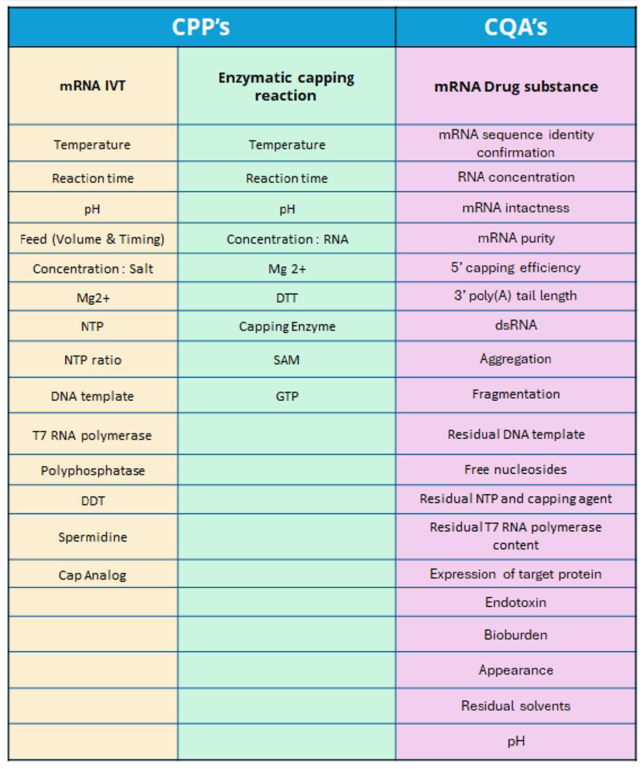
Table 1. Examples of CPPs and CQAs for the mRNA : IVT reaction. Table adapted from (8).
After PAT sensor selection, the next stage is implementation, where the PAT method and any technology development occur. With optical spectroscopies this often involves chemometric modelling and correlation to offline analytical values. The length of time required to complete deployment being PAT, CPP/CQA and unit operation specific. This is followed by PAT deployment to collect, monitor and statistically validate the data obtained. After completion, the final stage is implantation and the development of a control strategy, if required. Moving PAT into a GMP controlled environment brings its own considerations, such as i) instrument qualification, ii) method and model validation, iii) data integrity, iv) change control and v) real-time release compliance (30). PAT also falls into GAMP 5 software and systems validation (31).
Conclusions
It is an interesting time for PAT in biologics manufacture, with renewed interest from industry and PAT vendors. This is especially true for emerging modalities like RNA biologics. The translation of PAT to mRNA manufacture is in its infancy, with much development work still required. Initial work using PAT is encouraging, showing that real-time control and automation is possible. The knowledge base of PAT in mRNA manufacture seems likely to increase within the next 5-10 years, with PAT development being translated into the GMP manufacture environment.
References and notes
- PAT — A Framework for Innovative Pharmaceutical Development, Manufacturing, and Quality Assurance [Internet]. US Food and Drug Administration; 2004. Available from: https://www.fda.gov/regulatory-information/search-fda-guidance-documents/pat-framework-innovative-pharmaceutical-development-manufacturing-and-quality-assurance
- Abhijeet Welankiwar* GS. Exploring Process Analytical Technology: Applications and Benefits in Pharma Operations A Comprehensive Review [Internet]. 2025 Mar 5. doi:10.5281/ZENODO.14972354
- The International Council for Harmonisation (ICH) quality guidelines [Internet]. The International Council for Harmonisation (ICH. Available from: https://www.ich.org/page/quality-guidelines
- Continuous Biologics Processing case study [Internet]. CPI. Available from: https://www.uk-cpi.com/case-studies/continuous-biologics-processing
- UK Continuous 2 Case study [Internet]. Available from: https://www.uk-cpi.com/uk-continuous-2
- CPI joins national taskforce to develop COVID-19 vaccine [Internet]. CPI; 2020. Available from: https://www.uk-cpi.com/news/cpi-joins-national-taskforce-to-develop-covid-19-vaccine
- Self-amplifying RNA COVID-19 vaccine technology safe in humans, suggests study [Internet]. Imperial College London; 2021. Available from: https://www.imperial.ac.uk/news/222553/self-amplifying-rna-covid-19-vaccine-technology-safe/
- Analytical Procedures for Quality of mRNA Vaccines and Therapeutics – Draft Guidelines: 3rd Edition [Internet]. US Pharmecopia; 2024. Available from: https://www.usp.org/mrna
- EMA – Guideline on the quality aspects of mRNA vaccines [Internet]. European Medicines Agency; 2025. Available from: https://www.ema.europa.eu/en/documents/scientific-guideline/draft-guideline-quality-aspects-mrna-vaccines_en.pdf
- Zhang F, Wang Y, Wang X, Dong H, Chen M, Du N, et al. RT-IVT method allows multiplex real-time quantification of in vitro transcriptional mRNA production. Commun Biol. 2023 Apr 24;6(1):453. doi:10.1038/s42003-023-04830-1
- Kukushkina-Zvezdova AA, Zherebtsova AA, Telegina DV, Skvortsov IA, Ivanov RA, Reshetnikov VV. A comprehensive analysis of the use of nucleoside analogues in RNA therapeutics. J Transl Med. 2026 Apr 7. doi:10.1186/s12967-026-08083-4
- Wang K, Xie W, Zheng H. Stochastic Molecular Reaction Queueing Network Modeling for In Vitro Transcription Process [Internet]. arXiv; 2023 [cited 2026 Mar 23]. Available from: https://arxiv.org/abs/2305.09867 doi:10.48550/ARXIV.2305.09867
- Stover NM, Ganko K, Braatz RD. Mechanistic modeling of in vitro transcription incorporating effects of magnesium pyrophosphate crystallization. Biotechnol Bioeng. 2024 Sep;121(9):2636–47. doi:10.1002/bit.28699
- Helgers H, Hengelbrock A, Schmidt A, Strube J. Digital Twins for Continuous mRNA Production. Processes. 2021 Nov 4;9(11):1967. doi:10.3390/pr9111967
- Miller M, Alvizo O, Baskerville S, Chintala A, Chng C, Dassie J, et al. An engineered T7 RNA polymerase for efficient co-transcriptional capping with reduced dsRNA byproducts in mRNA synthesis. Faraday Discuss. 2024;252:431–49. doi:10.1039/D4FD00023D
- Ziegenhals T, Frieling R, Wolf P, Göbel K, Koch S, Lohmann M, et al. Formation of dsRNA by-products during in vitro transcription can be reduced by using low steady-state levels of UTP. Front Mol Biosci. 2023;10:1291045. doi:10.3389/fmolb.2023.1291045 PubMed PMID: 38146535; PubMed Central PMCID: PMC10749352.
- Hernandez-Abad PE, Huang J, Romero-Torres S. QbD and PAT: From Science to Compliance. Eur Pharm Rev. 2009.
- Boman J, Marušič T, Seravalli TV, Skok J, Pettersson F, Nemec KŠ, et al. Quality by design approach to improve quality and decrease cost of in vitro transcription of mRNA using design of experiments. Biotechnol Bioeng. 2024 Nov;121(11):3415–27. doi:10.1002/bit.28806
- Carvalho M, Cruz A, Haringa C, Ottens M, Klijn M. A Review on Quantitative Process Analytical Technology for Continuous Downstream Processing of Monoclonal Antibodies. Biotechnol Bioeng. 2026 Mar;123(3):564–81. doi:10.1002/bit.70139
- Esmonde-White KA, Cuellar M, Lewis IR. The role of Raman spectroscopy in biopharmaceuticals from development to manufacturing. Anal Bioanal Chem. 2022 Jan;414(2):969–91. doi:10.1007/s00216-021-03727-4
- Mishra A, Aghaee M, Tamer IM, Budman H. Spectroscopic Advances in Real Time Monitoring of Pharmaceutical Bioprocesses: A Review of Vibrational and Fluorescence Techniques. Spectrosc J. 2025 Apr 1;3(2):12. doi:10.3390/spectroscj3020012
- Baker MJ, Trevisan J, Bassan P, Bhargava R, Butler HJ, Dorling KM, et al. Using Fourier transform IR spectroscopy to analyze biological materials. Nat Protoc. 2014 Aug;9(8):1771–91. doi:10.1038/nprot.2014.110
- Maruthamuthu MK, Rudge SR, Ardekani AM, Ladisch MR, Verma MS. Process Analytical Technologies and Data Analytics for the Manufacture of Monoclonal Antibodies. Trends Biotechnol. 2020 Oct;38(10):1169–86. doi:10.1016/j.tibtech.2020.07.004
- Geinguenaud F, Militello V, Arluison V. Chapter 10 -Application of FTIR Spectroscopy to Analyze RNA Structure. In: Arluison V, Wien F, editors. RNA Spectroscopy [Internet]. New York, NY: Springer US; 2020 [cited 2026 Apr 8]. p. 119–33. (Methods in Molecular Biology). Available from: http://link.springer.com/10.1007/978-1-0716-0278-2_10 doi:10.1007/978-1-0716-0278-2_10
- Sarkar A, Dong G, Quaglia-Motta J, Sackett K. Flow-NMR as a Process-Monitoring Tool for mRNA IVT Reaction. J Pharm Sci. 2024 Apr;113(4):900–5. doi:10.1016/j.xphs.2023.11.021
- Analysis of RNA nucleotides using the Bruker Fourier 80 benchtop NMR [Internet]. Bruker; 2025. Available from: https://www.bruker.com/en/products-and-solutions/mr/nmr-pharma-solutions/nmr-benchtop-for-quality-control.html
- Arluison V, Wienen F, editors. RNA spectroscopy: methods and protocols : Chapter 11 – Application of Synchrotron Radiation Circular Dichroism for RNA Structural Analysis. New York: Humana Press; 2020. 356 p. (Methods in molecular biology; no. 2113).
- Webb ALJ, Welbourne EN, Evans CA, Dickman MJ. Characterisation and analysis of mRNA critical quality attributes using liquid chromatography based methods. J Chromatogr A. 2025 Mar;1745:465724. doi:10.1016/j.chroma.2025.465724
- Camperi J, Chatla K, Freund E, Galan C, Lippold S, Guilbaud A. Current Analytical Strategies for mRNA-Based Therapeutics. Molecules. 2025 Apr 6;30(7):1629. doi:10.3390/molecules30071629
- Current Good Manufacturing Practice (CGMP) Regulations [Internet]. FDA. Available from: https://www.fda.gov/drugs/pharmaceutical-quality-resources/current-good-manufacturing-practice-cgmp-regulations
- GAMP 5 Guide 2nd Edition [Internet]. International Society of Pharmaceutical Engineering (ISPE); 2022. Available from: https://ispe.org/publications/guidance-documents/gamp-5-guide-2nd-edition

The return of the tool-building chemist

From Fermentation to High Containment: Indena’s Integrated European Pl...

Navigating Pharma’s Forced Supply Chain Revolution

Unlocking Innovation Through Industrial Photochemistry

From Trial and Error to Predictive Design: How AI Is Transforming Form...

APIs, HPAPIs and the Future of Pharmaceutical Development

The Importance of Occupational Health Expertise in HPAPI Manufacturing

GLOBAL REVOLUTION IN PHYTOPHARMACEUTICALS: How Melisa Farm Decoded Med...