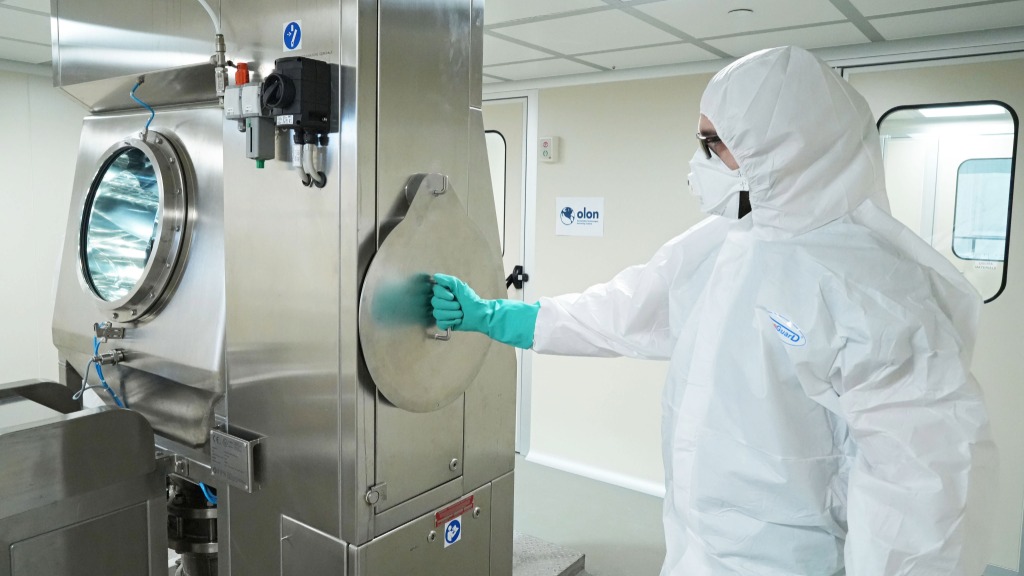
Olon combines high-potency chemistry, linker-payload development and bioconjugation within one organisation, simplifying ADC development and supporting the transition from early research to commercial scale.
Few drug modalities bring chemistry and biology together as closely as antibody-drug conjugates (ADCs). Developing one requires expertise in biologics, high-potency active pharmaceutical ingredients (HPAPIs) and bioconjugation, and many of the most important decisions are made where these disciplines meet, from linker-payload design and safe handling to conjugation with the antibody.
This makes the choice of development and manufacturing partners important. When the antibody, payload-linker and conjugation are each handled by a different supplier, every handover adds coordination effort and makes it harder to preserve technical knowledge as a project advances.
Olon offers a different model. It brings HPAPI and linker-payload chemistry together with biologics and bioconjugation capabilities in a single connected network, so that every stage of an ADC project can be supported by one partner.
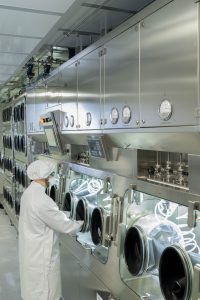
Continuity also matters as projects mature. Because the same partner can support HPAPI, linker-payload and bioconjugation activities from early development through to commercial scale, teams can build on what they have already learned rather than starting again with a new supplier at each stage.
This way of working reflects how Olon approaches development more broadly: bringing the right expertise together early and keeping it connected. At the Technology & Innovation Hub in Rodano, around 100 scientists work side by side across process development, analytics, process safety, chemical reaction engineering and innovation, addressing both the chemistry and the practical demands of a robust manufacturing process. They are part of a network of approximately 350 R&D scientists across 14 centres worldwide, working with partners on different molecules and challenges. What they learn in one field can inform another, while innovation remains closely linked to everyday process work, from designing safer, more scalable routes to finding better ways to characterise and control them.
That collaboration extends to manufacturing as well. Olon has expanded its manufacturing capabilities in the United States and Europe, giving partners the option to manufacture closer to their own operations and markets while drawing on the same scientific and technical network.
As therapeutic modalities become more complex, ADCs draw on expertise from several disciplines. Connecting those areas, and working closely with partners, can help turn new science into reliable processes.