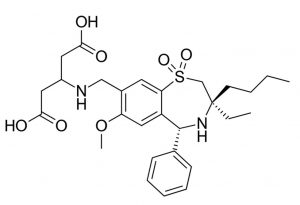
Linerixibat is an orally administered, minimally absorbed ileal bile acid transporter (IBAT) inhibitor developed to treat cholestatic pruritus associated with primary biliary cholangitis (PBC). Its mechanism is based on blocking the reuptake of bile acids in the terminal ileum, thereby reducing circulating bile acid burden and helping relieve the severe itch that frequently affects patients with PBC. Earlier GSK materials also note that the drug had received orphan drug designation in the United States and the European Union during development.
In the United States, linerixibat was approved by the FDA on March 17, 2026, under the brand name Lynavoy. The approved indication is for the treatment of cholestatic pruritus associated with primary biliary cholangitis in adult patients. FDA’s 2026 novel drug approvals list identifies Lynavoy (linerixibat) as a novel drug approved for this use, and the FDA approval letter confirms the NDA approval for this adult PBC-related cholestatic pruritus indication.
According to GSK, the FDA approval was supported by results from the Phase III GLISTEN trial, which showed benefit in patients suffering from the persistent and often debilitating itch associated with PBC. GSK described Lynavoy as the first medicine approved in the US specifically for cholestatic pruritus in patients with PBC, highlighting the important unmet need in this setting.
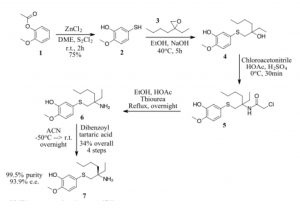
Scheme 1. Synthesis of intermediate 7.
A major strategic development occurred just before approval. On March 9, 2026, GSK and Alfasigma announced a licensing agreement under which Alfasigma obtained worldwide exclusive rights to develop, manufacture, and commercialize linerixibat. Under the terms disclosed by GSK, GSK is to receive an upfront payment of $300 million, an additional $100 million upon US FDA approval, $20 million upon EU and UK approval, and up to $270 million in sales-based milestone payments, along with tiered double-digit royalties on worldwide net sales.
This agreement is particularly notable because it positions Alfasigma to lead the global commercial future of linerixibat while allowing GSK to retain economic upside through milestones and royalties. From a market and portfolio perspective, the deal reflects confidence that linerixibat can become an important specialty therapy in cholestatic liver disease, especially in a population where symptom control has historically been limited. The March 9 announcement described linerixibat as still investigational at signing, while the later FDA approval on March 17, 2026 rapidly converted that transaction into one centered around a newly approved product.
The synthetic approach begins with treatment of 2-methoxyphenyl acetate (1) with S2Cl2 and ZnCl2 in DME affords 5-mercapto-2-methoxyphenyl acetate , which is subsequently hydrolyzed under acidic conditions (HCl in H2O). The resulting intermediate then undergoes simultaneous disulfide bond reduction and carboxylic acid reduction with Zn, delivering 5-mercapto-2-methoxyphenol (2) in 75% yield. Nucleophilic opening of (±)-2-butyl-2-ethyloxirane (3) with thiophenol 2 in the presence of NaOH in EtOH furnishes the corresponding tertiary alcohol 4. This intermediate is then subjected to a Ritter reaction with chloroacetonitrile in the presence of H2SO4 and AcOH, providing chloroacetamide derivative 5. Subsequent removal of the chloroacetyl group using thiourea and AcOH in EtOH yields the free amine 6, which is resolved with (-)-dibenzoyl-L-tartaric acid in acetonitrile to furnish the desired (R)-isomer 7 in 34% overall yield, with 99.5% purity and 93.8% ee.
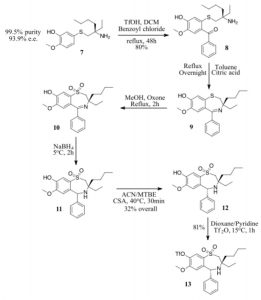
Scheme 2. Synthesis of key intermediate 13.
Benzoylation of phenolic intermediate 7 with benzoyl chloride in the presence of TfOH in CH2Cl2 gives intermediate 8 in 80% yield. Cyclization of 8 using citric acid in refluxing toluene affords the corresponding benzothiazepine derivative 9, which is subsequently oxidized with Oxone in MeOH to furnish sulfone 10. Reduction of the imine moiety in 10 with NaBH4 provides secondary amine 11. Resolution of this intermediate with CSA in acetonitrile/MTBE then delivers the desired (R,R)-isomer 12 in 32% overall yield. Finally, sulfonylation of 12 with Tf2O in the presence of pyridine in dioxane furnishes the corresponding triflate 13, a key intermediate in the synthesis of linerixibat.
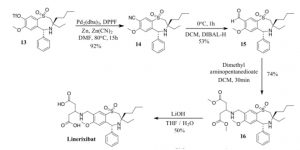
Scheme 3. Final steps towards linerixibat synthesis.
Reaction of compound 13 with Zn(CN)2 in the presence of Zn, Pd2(dba)3, and DPPF in DMF at 80 °C affords carbonitrile 14 in 92% yield. Subsequent reduction of 14 with DIBAL in CH2Cl2 at 0 °C for 1 hour furnishes aldehyde 15. Reductive condensation of aldehyde 15 with dimethyl 3-aminopentanedioate then provides secondary amine 16. Finally, hydrolysis of the dimethyl ester moieties in 16 using LiOH in THF/H2O affords the target compound, linerixibat, in 50% yield.

The Renaissance and Industrial (r)Evolution of Peptide and Oligonucleo...

Empowering the Full Lifecycle of Drug Development

Europe’s Critical Medicines Act: A Test of Health Sovereignty—and Indu...

The data beneath the disruption: why process maturity and data account...

Science is not enough: the operational disciplines of venture capital...

Industry 5.0-Ready Laboratories: Beyond Automation Towards Human-Centr...

From trial-and-error to predictive intelligence: How bespark*bio is re...
Patentability of Markush formulae