Making bulk material flows visible. Understanding processes better.
There is plenty of movement in a bulk material handling plant — yet a crucial part of what happens often remains hidden. Grain flows out of a silo, granules pass through production, and pellets are loaded for transport. But how much material is actually moving through the plant? How consistent is the flow? And how much has already reached the receiving vehicle?
Integrating suitable weighing technology into a plant, however, often presents challenges for operators and plant designers. Space is limited, pipe layouts are fixed, and connections may be round or rectangular. Different material properties add another layer of complexity: free-flowing grain requires a different approach to material guidance than flour, flakes or recycled materials.
With the Flow Weigher DC4, FRIEDRICH electronic has developed a weighing system that offers the flexibility to meet these demands. It combines continuous measurement with a modular design and a wide range of configuration options. The guiding principle is practical: weighing technology should fit the application and provide information where it is needed. With the DC4 series, FRIEDRICH electronic will complement the existing DC3 series and further expand its product portfolio. This will give users additional options for finding the right solution for their bulk material handling application.
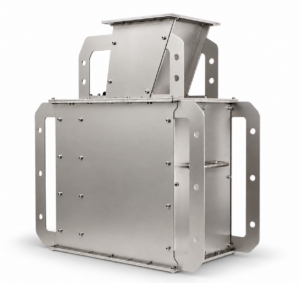
Fig1_DC4-A250-N00.E3204.003
A continuous view of material flow
Bulk materials vary widely, and so do the potential applications of the Flow Weigher DC4. Its range includes free-flowing materials such as grain and seeds, pulses, coffee beans, granules and pellets.
This versatility requires careful matching of the system to the task. The appropriate configuration depends on the material properties and process conditions, allowing the solution to be tailored to the application.
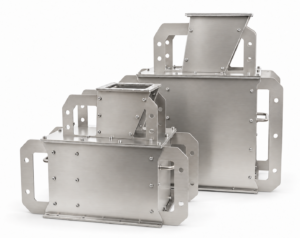
Fig2_DC4-A200_A250-N00.E3204.002
Weighing results that make a practical difference
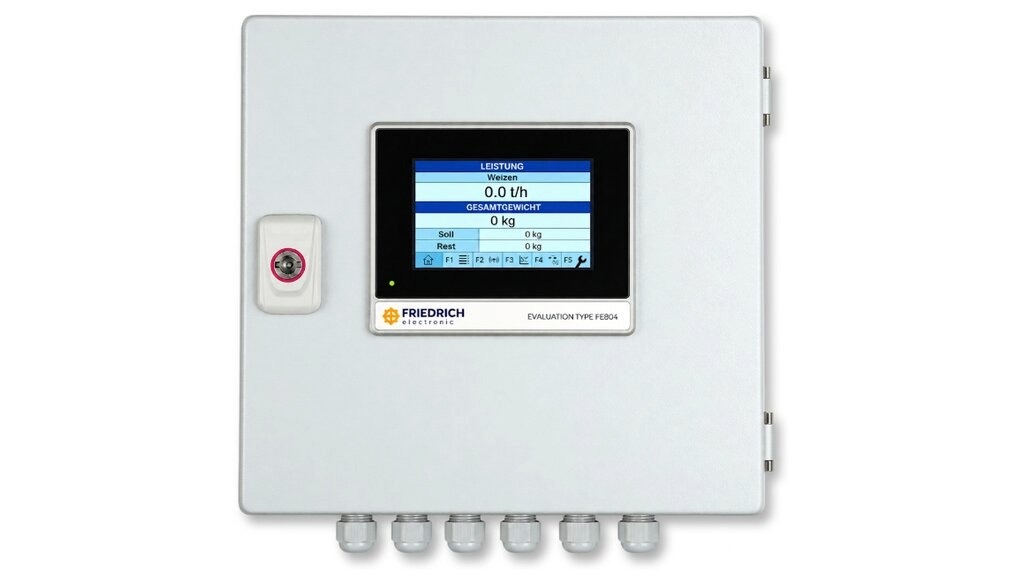
Signals are transmitted digitally between the weighing unit and the evaluation unit. The touch panel can therefore be installed at a considerable distance from the measuring point — in a location that is accessible and suits the plant’s operating routines.
Within production, this transparency also delivers practical value. Understanding material flows helps operators make sense of their processes and base decisions on actual measurements.