Introduction: From Digitalisation to Intelligence
Over the past decade, many laboratories across the chemical and pharmaceutical industries have undergone rapid digital transformation. Under the paradigm of Industry 4.0, laboratories have implemented automation, hardware connectivity, and data integration to improve efficiency and reproducibility. Yet, despite these advances, many workflows remain constrained by sequential experimentation, fragmented data infrastructures, and reliance on human/manual operations.
Now a new paradigm is emerging. Industry 5.0 moves beyond incremental technological upgrades and offers a fundamental shift toward human-centric, resilient, and sustainable innovation approaches. In the laboratory context, this transition is redefining how experiments are conceived, executed, and interpreted, giving rise to a new generation of self-driving, adaptive laboratories.
Industry 4.0: Achievements and Limitations
Industry 4.0 (1) introduced several transformative capabilities including the automation of repetitive experimental tasks such as weighing or screening, digital data capture and laboratory information management systems (LIMS), the implementation of robotics and high-throughput experimentation and the early adoption of machine learning (ML) for data analysis. Such advances have improved productivity and reproducibility, but are largely focused on efficiency and digitalisation, as opposed to fundamentally rethinking how science is conducted.
An important limitation lies in the fragmented nature of workflows. Experimental design, execution, and analysis are often disconnected, with data stored in inconsistent formats and interpretations derived retrospectively. Even with automation, experimentation frequently remains linear and labour-intensive, limiting scalability in the face of increasing function complexity and sustainability pressures.
Industry 5.0: Human-Centric and Adaptive
Industry 5.0 builds upon the key aspects of Industry 4.0 but introduces three defining factors. Human-Centricity: Instead of displacing scientists for robotic or automated alternatives, human expertise is augmented with AI-driven insights allowing collaboration between human intuition and machine intelligence and enabling enhanced decision-making and creativity. Sustainability: Laboratories are increasingly expected to minimise waste, energy consumption, and environmental impact. Industry 5.0 aims to integrate sustainability at an earlier stage i.e. directly into experimental design and optimisation maximising opportunities for sustainable interventions. Resilience: Future laboratories must be adaptable to disruptions such as supply chain constraints as a result of global events, local operational challenges and emerging scientific demands.
In pharmaceutical and chemical R&D, this translates into interpretable AI systems, collaborative robotics, and flexible digital infrastructures that support both innovation operational excellence. End users are freed from repetitive tasks, enabling focus on creativity and interpretation, particularly relevant in chemical applications which require tacit knowledge and intuition.
Self-Driving Laboratories: The Core of Industry 5.0
At the heart of Industry 5.0-ready laboratories lies the concept of the Self-Driving Laboratory (SDL) (2). SDLs integrate AI and ML, robotics and automated experimentation platforms, real-time data acquisition and feedback loops and digital twins and predictive modelling.
Unlike traditional automated labs, SDLs operate in a closed-loop system (see Figure 1) where an iterative cycle enables rapid exploration of complex experimental spaces, significantly accelerating research activities. In this context, AI is not simply analysing results, but is actively guiding experimentation, prioritising the most informative experiments and continuously refining hypotheses.
Research suggests that such systems can increase throughput by orders of magnitude whilst reducing resource consumption and experimental redundancy. Furthermore, SDLs enable access to vaster chemical spaces, uncovering novel solutions which would be impractical to explore manually (3).
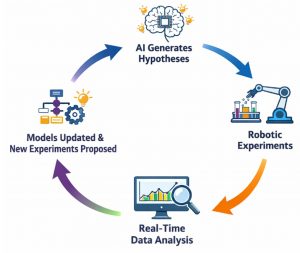
Figure 1. Closed-loop concept for Self-Driving Laboratories (SDLs).
Applications in Pharmaceuticals and Chemicals
The pharmaceutical sector is among the earliest adopters of Industry 5.0 laboratory concepts (4). SDLs are already enabling rapid optimisation of synthetic routes, accelerated drug discovery pipelines, data-driven scale-up strategies and integration of process development with manufacturing. Traditional process development often relies on trial-and-error approaches, which are time-consuming and difficult to scale. In contrast, Industry 5.0 systems integrate data-rich experimentation, mechanistic modelling, and AI workflows into unified platforms, enabling more predictive and efficient development processes.
Similarly, in chemical manufacturing, AI-powered labs are reducing waste and energy use while improving product quality. Recent developments show that self-driving systems can select the most informative experiments, reducing the number of trials needed and accelerating innovation cycles (5).
Digital Infrastructure: The Backbone of Future Labs
A defining feature of Industry 5.0-ready laboratories is the integration of a robust digital infrastructure. This includes structured data architectures, with standardised, machine-readable data formats. Designing such an architecture can often be challenging, particularly in an environment where there are multiple equipment nodes supplied by different manufacturers. The potential payoffs cannot be underestimated however, as optimised data architectures can create Knowledge Graph systems (see Figure 2) which organise and retain the context of data, identify trends and patterns and remove the need to repeat experiments due to poor data management.
Digital Twins have been drawing increasing interest, moving beyond simple training tools, to providing virtual representations of experiments and processes and allowing simulation and optimisation before physical execution.
A common pitfall is the implementation of multiple and non-interoperable software platforms such as electronic lab management systems (ELMs) (6), ELNs, or safety systems which introduce bottlenecks and confusion for end users. Seamless integration between equipment, software, and AI models is essential for closed-loop operation.
Furthermore, distributed cloud and edge computing enables real-time data processing and scalability. These can be costly, not just upfront but also considering on-going support and maintenance requirements. Without these elements however, even advanced automation systems cannot achieve true autonomy.
Challenges and Barriers to Adoption
Despite their potential, Industry 5.0-ready laboratories face several challenges including data quality and standardisation, integration of legacy systems, skills gaps, trust (especially in regulated industries like pharmaceuticals) and data security. Poor quality data can significantly limit the effectiveness of AI models and validation steps are essential to avoid nonsensical results.
As an organisation, ensuring you have the right skills in place is a huge consideration and modern scientists generally need to develop interdisciplinary skills in data science, automation, and AI. Academic centres such as CMAC (7) are championing multidisciplinary research and Doctoral Training Centre’s (CDTs) continue to be an effective platform for training the future workforce as they also tend to bridge across academia and industry.
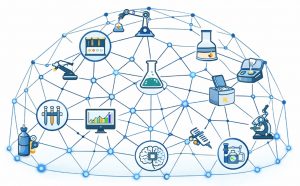
Figure 2. Schematic of a Knowledge Graph.
Autonomous systems introduce new risks in safety and security that must be carefully managed. Research laboratories may at best experience significant disruption from cyber-attacks whereas commercial environments will likely be faced with substantial financial penalties should they be compromised whilst handling sensitive data.
Overall, addressing these challenges and barriers requires not only technological innovation but also organisational and cultural transformation.
Sustainability
Labs are inherently energy intensive and significant contributors to greenhouse gas emissions (GHGs). Chemical waste generation, fast-moving consumables such as single use plastics, energy demanding infrastructure, particularly fumehoods, complex instrumentation with a range of different service requirements, all typically within 24/7 operation environments, this will come as no surprise.
Most organisations have been taking steps to reduce GHG emissions across Scopes 1, 2 and 3 in line with environmental pressures however common mistakes such as missing or poor quality baselining, limited consideration of indirect (Scope 3) emissions and inadequate allocation of dedicated resources are still taking place. It is therefore critical that organisations plan their activities around the following key areas. Infrastructure: flexible operation of airflow systems, lighting and heating. Energy efficient technologies: standby modes, sustainable consumables, cleaning and waste generation considerations. Smart technologies: robotics, automation, simulation/modelling and data management/streamlining. Culture: empowering end users to adopt sustainability practices across their activities. These areas are often tackled individually however a whole systems approach will increase the likelihood of greater success.
SDLs contribute to this success by integrating sustainability into the core of operational and experimental design.
The Road Ahead
Looking forward, Industry 5.0 laboratories are expected to evolve toward even greater levels of autonomy and intelligence. Emerging trends include multi-agent AI systems capable of complex reasoning, lab manager avatars supporting safety and compliance, integration of generative AI for experimental design, fully autonomous research platforms operating with minimal human intervention and global, interconnected lab networks sharing data and insights. In 2024, the Canadian Regional Artificial Intelligence Initiative (RAII) announced a $200 M investment to help bring new AI technologies to market and help accelerate AI adoption by SMEs and sectors across the country, highlighting their commitment to be a frontrunner in this space (8).
Full potential will require overcoming challenges in data infrastructure, integration, and organisational change. For laboratories willing to embrace this shift, the rewards are substantial: accelerated discovery, improved sustainability, and a more resilient innovation platform. Future laboratories will no longer be a place where experiments are simply performed but instead become dynamic, intelligent platforms that learn, adapt, and evolve alongside the scientists who guide them.
References and notes
- McGlone T Lab digitalisation and industry 4.0 Chemistry World 2024
- Papageorgiou, C. D. Self-Driving Laboratories in the Pharmaceutical Industry AIChE 2026
- Pickles T et al. ThinkFactory 2025: community discussion on harmonizing and accelerating self-driving laboratories Matter 2026 (9)
- Florence A J et al. A hybrid system of mixture models for the prediction of particle size and shape, density, and flowability of pharmaceutical powder blends Int J Pharm. 2024 (8) 100298
- Cooper A I et al. A mobile robotic process chemist Digital Discovery 2026 (5) 1363
- McGlone T The case for lab management systems Chemistry World 2018
- Centre for Continuous Manufacturing and Advanced Crystallisation https://www.cmac.ac.uk/
- https://www.canada.ca/en/innovation-science-economic-development/news/2024/10/federal-government-launches-programs-to-help-small-and-medium-sized-enterprises-adopt-and-adapt-artificial-intelligence-solutions.html

The Renaissance and Industrial (r)Evolution of Peptide and Oligonucleo...

Empowering the Full Lifecycle of Drug Development

Europe’s Critical Medicines Act: A Test of Health Sovereignty—and Indu...

The data beneath the disruption: why process maturity and data account...

Linerixibat (Lynavoy)

Science is not enough: the operational disciplines of venture capital...
From trial-and-error to predictive intelligence: How bespark*bio is re...
Patentability of Markush formulae