
Introduction
Highly Potent Active Pharmaceutical Ingredients (HPAPIs) have gained strategic importance across multiple therapeutic areas, including oncology, immunology, CNS, cardiovascular, ophthalmology and respiratory indications, as well as in emerging fields such as targeted therapies such as antibodyEN_DASHdrug conjugates ADCs). These applications are characterized by increasing potency and, in some cases, high target specificity (eg. ADC payloads), leading to compounds that are active at extremely low doses, often translates into very low OELs, sometimes in the nanogram per cubic meter range, and require stringent control strategies.
In many realworld situations, however, OELs may be unavailable due to insufficient toxicological data EM_DASH particularly during early developmentEM_DASHor industrial hygiene monitoring may face analytical limitations at very low concentrations is difficult to verify due to analytical limitations, making purely quantitative exposure assessment insufficient. As a result, the pharmaceutical sector has progressively complemented classical industrial hygiene with alternative approaches such as live-categorization and control banding systems to guide preventive measures.
In Spain, this approach has been formalized through the work of the VGEL-PAIF Working Group of the National Institute for Safety and Health at Work (INSST), particularly through the NTP (Technical Notes on Prevention) series, and more specifically NTP 1104 and NTP 1105, which provide a structured framework linking hazard characterization to risk assessment, and from risk assessment to practical prevention strategies.
The role of INSST and the VGELNONBREAKING_HYPHENPAIF working group
The Instituto Nacional de Seguridad y Salud en el Trabajo (INSST) in Spain serves as the national reference institution for occupational safety and health. Within INSST, the VGELNONBREAKING_HYPHENPAIF working group (Valores Guía de Exposición Laboral EN_DASH Principios Activos Farmacéuticos) is a multidisciplinary collaboration involving experts in toxicology, pharmacology, occupational hygiene, and industrial safety, but also in process, engineering and facility design, that has supported the development of practical guidance for managing exposure to active pharmaceutical ingredients in laboratories and manufacturing environments.
The group’s mission includes reviewing evidence, proposing consistent categorization/banding criteria and translating them into prevention strategies applicable to dayNONBREAKING_HYPHENtoNONBREAKING_HYPHENday operations.
This model relies on a high level of mutual trust and confidentiality, ensuring that shared insights remain within the group, thereby enabling more candid and meaningful technical discussions.
The group’s main objectives include:
- Evaluating scientific data related to occupational exposure.
- Establishing consistent occupational toxicological hazard categorization/banding criteria for APIs.
- Developing practical guidance for safe handling.
- Bridging the gap between regulatory expectations and industrial reality.
Over more than two decades, this collaborative work has led to the development and evolution of the NTP series, integrating real industrial experience with scientific and regulatory knowledge.
Evolution of the Spanish NTP framework
The Spanish approach to API occupational health and safety management has evolved progressively through successive NTP publications, addressing the full lifecycle of occupational risk managementEM_DASHfrom exposure recognition and health risk identification to risk assessment, limit setting, implementation of preventive measures and verification of control/containment performance.
Early NTPs (721EN_DASH724) established foundational concepts of exposure potential, health risks and category-based control strategies in the pharmaceutical industry, particularly in scenarios where no company-derived OELs are not yet available (3EN_DASH6). These were complemented by subsequent developments, including NTP 798, which proposed preventive measures linked to hazard categorization and became a reference model for more than a decade (7), and NTP 855, which extended these principles to laboratory environments (8).
Further contributions addressed specific operational aspects: NTP 879 defined requirements for facilities and personnel involved in the handling of potent compounds (9), NTP 939 introduced approaches for verification and monitoring of containment and protective measures (10), and NTP 1017 focused on maintenance operations as a critical but often overlooked source of exposure (11).
However, as HPAPI manufacturing became increasingly complex, limitations in earlier categorization systemsEM_DASHparticularly the excessive variability within intermediate hazard categories (e.g., Category 3)EM_DASHbecame evident. This highlighted the need for a more refined and consistent framework capable of better aligning hazard classification with appropriate control strategies.
This evolution ultimately led to the development of NTP 1104 and NTP 1105, which represent a more advanced and integrated approach. More recently, NTP 1210 further updated the methodology for establishing occupational exposure guideline values for pharmaceutical active ingredients, incorporating advances in toxicology and risk assessment (12).
Together, these developments reflect a progressive shift from descriptive guidance towards a more structured, integrated and operational risk management framework.
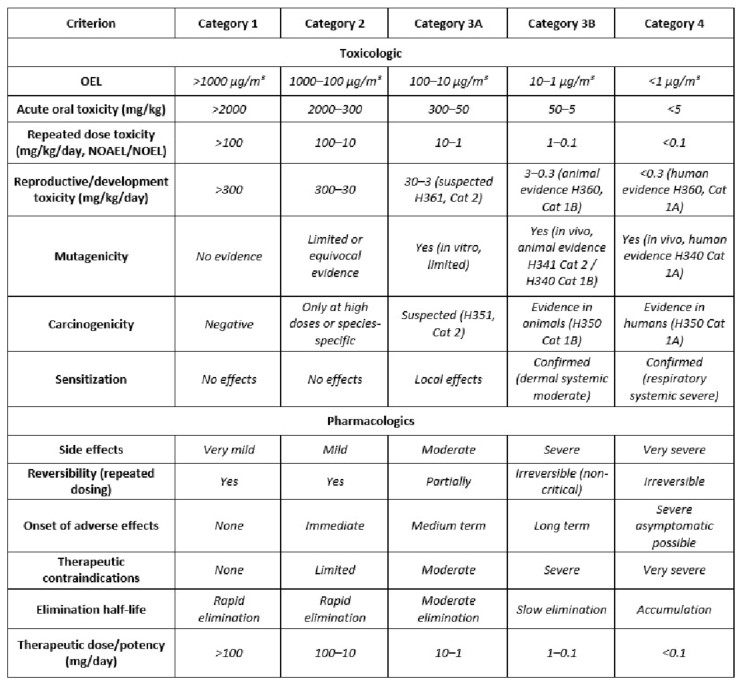
Table 1. Categorization/banding systems according NTP 1104.

Figure 1. Integrated HPAPI management cycle linking NTP 1104 categorization to NTP 1105 preventive measures and continuous improvement.
Note: hazard categorization should be performed or supervised by a qualified occupational toxicologist.
NTP 1104: Occupational Toxicological Hazard Categorization of active pharmaceutical ingredients
NTP 1104 provides a systematic, scienceNONBREAKING_HYPHENbased process to categorize APIs according to toxicological and pharmacological evidence and to link that categorization to Occupational Exposure Banding (OEB) (1). The categorization framework supports decisionNONBREAKING_HYPHENmaking when quantitative exposure limits are unavailable or uncertain, and it promotes consistent communication across functions (toxicology, engineering, operations and HSE).
Why categorization is needed
Traditional exposure assessment methods rely heavily on OELs and quantitative monitoring. However, for many APIs these parameters may not be available, sufficiently robust or readily measurable.
Therefore, categorization systems provide a pragmatic solution by:
- Grouping substances with similar hazard profiles.
- Defining preventive measures based on hazard bands.
- Allowing conservative decision-making in the absence of complete data.
Control Banding and OEB Systems
The framework integrates existing industry approaches such as Naumann and SafeBridge systems and aligns them into a five-category model. This refinement addresses previous limitations by:
- Increasing categorization precision.
- Differentiating substances with varying levels of potency within the same band.
- Improving alignment between hazard and control measures.
Key Elements for Categorization
The categorization process is based on multiple parameters:
- Toxicological data (acute, chronic, CMR properties).
- Pharmacological activity and therapeutic dose.
- Reference values such as NOAEL or LOAEL.
- Exposure routes (inhalation, dermal, ingestion).
In cases where data are limited, a conservative approach is adopted, assigning a higher hazard category to ensure protection.
Practical Implications
Beyond supporting hazard characterization, categorization also serves as:
- A communication tool across departments.
- A basis for internal banding systems.
- A driver for prioritizing risk mitigation actions.
However, a critical principle must be emphasized:
Categorization is a toolEM_DASHnot an end in itself.
NTP 1105: Preventive measures for API handling across hazard categories
Building on the categorization established in NTP 1104, NTP 1105 translates hazard categories into a comprehensive framework for implementing preventive measures and control/containment strategies applicable across R&D, pilot and manufacturing settings (2). It reinforces a hierarchical approach to exposure control, prioritizing engineering controls and containment, complemented by organizational controls and PPE, and supported by industrial hygiene verification and monitoring.
A Hierarchical Approach to Risk Management/Mitigation
NTP 1105 follows the classical hierarchy of controls:
- Engineering controls (primary and secondary containment).
- Organizational and procedural measures.
- Personal protective quipment (PPE).
This structure prioritizes that protection is primarily achieved through design and system performance, rather than reliance on individual behavior.
Containment as a Core Principle
For HPAPIs,, process design should first be optimized toward closed and efficient operation. Engineering controls and containment are then applied proportionately to the assessed risk. When containment is required, it represents the most effective strategy to prevent exposure, typically including (according the risk):
- Closed systems for material transfer.
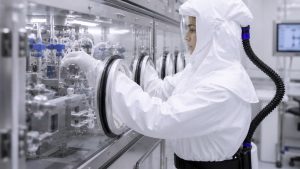
- Barrier devices (Eg. Isolators and gloveboxes).
- (Airflow-based Devices (Eg. Downflow booths or HEPA Cabinets) for controlled operations.
- Minimization of manual interventions.
Facility Design and Engineering Controls
The design of the production environment plays a critical role, including:
- Segregation of areas and defined workflows.
- Airlocks (SAS) for material and personnel.
- Pressure cascade to protect workers and prevent cross-contamination.
- Dedicated HVAC systems.
Ventilation and Filtration
Proper air management is essential for controlling airborne contamination:
- Adequate air change rates.
- Controlled airflow direction.
- HEPA filtration systems.
- Limited or controlled recirculation.
Role of PPE
PPE is considered the last layer of protection, including:
- Respiratory protection (P3 filters, PAPRs, air supply systems).
- Protective clothing and gloves.
- Dedicated equipment within controlled areas.
Lifecycle Risk Management
A key contribution of NTP 1105 is the recognition that exposure risks extend beyond production:
- Cleaning and decontamination.
- Maintenance and dismantling.
- Emergency situations.
- Waste management.
This reinforces the need for a lifecycle approach to HPAPI safety.
Monitoring and Verification
Monitoring is essential to verify the effectiveness of implemented controls:
- Personal and environmental sampling.
- Surface contamination monitoring.
- Continuous verification of HVAC performance.
- Periodic containment testing.
Integrating categorization and prevention: a continuous improvement cycle
The combined use of NTP 1104 and NTP 1105 can be operationalized as a continuous cycle:
Categorization defines the hazard baseline, prevention defines proportional controls, monitoring verifies performance, and improvement embeds learning through CAPA and periodic reassessment. This integrated approach ensures that risk assessment is scientifically grounded, preventive measures are aligned with assessed risk, building on hazard characterization, and performance is continuously verified and refined over time.
Importantly, beyond potency and toxicity, prevention decisions must also consider taskspecific and operational factors such as the quantity handled, physical properties (e.g. dustiness or volatility), duration and frequency of exposure, process scale, operational complexity and degree of manual intervention.
Discussion: towards harmonization
Although NTPs are not legally binding, they are widely recognized as best practice references in Spain and have a strong practical influence in both regulatory and operational contexts, including audits and inspections. Despite the robustness of the Spanish framework, HPAPI management remains fragmented at the European level, particularly in terms of OEB definitions, containment performance expectations and verification practices.
The experience of the VGELPAIF working group highlights the importance of collaboration between industry and institutions, the integration of realworld data into guidance, and the continuous adaptation of frameworks to technological and scientific developments based on continuous scientific dialogue, evidence and data. In this context, a key future challenge is the harmonization of these approaches at the European level, aiming to establish consistent standards for categorization, containment and exposure control.
While this work provides practical guidance for implementation in industrial HPAPI environments, its effective application ultimately depends in the integration of multidisciplinary expertise including toxicology, industrial hygiene, chemical engineering, process knowledge, containment technology and applicable legal frameworks supported by handson real industrial experience.
Conclusions
Effective HPAPI management cannot rely on a single control element. The Spanish NTP 1104 and NTP 1105 framework provides an integrated, practical system that links scienceNONBREAKING_HYPHENbased categorization to operational prevention and verification, but requires a high level of technical expertise and experience for its effective application.
Together, they represent a valuable reference for the pharmaceutical industry, demonstrating that effective HPAPI management is not based on isolated measures, but on a holistic and lifecycle-driven strategy.
Ultimately, the key message remains clear:
You cannot manage what you have not categorized EM_DASH and you cannot protect what you do not control systematically.
Disclaimer
The opinions expressed in this article are personal and do not necessarily reflect the official position or policy of any company or organization. The information provided is for informational and educational purposes only and should not be interpreted as an official document.
Acknowledgements
The author acknowledges the VGELNONBREAKING_HYPHENPAIF working group contributors (INSST) and the collaborating professionals from Spanish and multinational pharmaceutical companies who helped consolidate the practical implementation experience reflected in the NTP framework.
VGELNONBREAKING_HYPHENPAIF working group contributors: Alejandro, Lara (Insud Pharma), Alonso, Mar (Laboratorios Normon), Balda, Alberto (Laboratorios Cinfa), Bou Bosch, Raquel (Annion Pharma), BustosNONBREAKING_HYPHENCarmona, Elia (Merck), Cabañas, Cristina (Hyperion Materials & Technologies), de la Fuente, Blanca (Centro Nacional de Condiciones de Trabajo EN_DASH INSST), Estruch, Gastón (Inke Ophthalmics), Fernández, Imma (Boehringer Ingelheim), García, Alberto (Merck), Hernández, Mónica (Merck), López Román, Begoña (Esteve), López, Victoria (Dalia Global), Márquez, Antonio José (Farmhispania), Martínez, Ángel (Farmhispania), Mora, Lidia (BCN Peptides), Nolla Jornet, Albert (Farmhispania), Pérez, Begoña (Recipharm), Solans Lampurlanés, Xavier (Centro Nacional de Condiciones de Trabajo EN_DASH INSST), Urrutia, Cristina (Laboratorios Cinfa), Valera, César (AGC Pharma Chemicals), Vallés, Gemma (Kern Pharma).
References and notes
- INSST. NTP 1104: Industria farmacéutica: clasificación de principios activos en categorías. 2018. Available from: https://www.insst.es/documentacion/colecciones-tecnicas/ntp-notas-tecnicas-de-prevencion/32-serie-ntp-numeros-1101-a-1135-ano-2018/ntp-1.104-industria-farmaceutica-clasificacionde-principios-activos-en-categorias
- INSST. NTP 1105: Industria farmacéutica: medidas para la prevención de la exposición a principios activos. 2018. Available from: https://www.insst.es/documentacion/colecciones-tecnicas/ntp-notas-tecnicas-de-prevencion/32-serie-ntp-numeros-1101-a-1135-ano-2018/ntp-1.105-industria-farmaceutica-medidas-para-la-prevencion-de-la-exposicion-a-principios-activos
- INSST. NTP 721: Los fármacos en la industria farmacéutica (I): exposición y riesgos para la salud. 2006. Available from: https://www.insst.es/documentacion/colecciones-tecnicas/ntp-notas-tecnicas-de-prevencion/21-serie-ntp-numeros-716-a-750-ano-2006/ntp-721-los-farmacos-en-la-industria-farmaceutica-i-exposicion-y-riesgos-para-la-salud
- INSST. NTP 722: Los fármacos en la industria farmacéutica (II): control de la exposición por categorías. 2006. Available from: https://www.insst.es/documentacion/colecciones-tecnicas/ntp-notas-tecnicas-de-prevencion/21-serie-ntp-numeros-716-a-750-ano-2006/ntp-722-los-farmacos-en-la-industria-farmaceutica-ii-control-de-la-exposicion-por-categorias
- INSST. NTP 723: Los fármacos en la industria farmacéutica (III): evaluación de los riesgos de los principios activos. 2006. Available from: https://www.insst.es/documentacion/colecciones-tecnicas/ntp-notas-tecnicas-de-prevencion/21-serie-ntp-numeros-716-a-750-ano-2006/ntp-723-los-farmacos-en-la-industria-farmaceutica-iii-evaluacion-de-los-riesgos-de-los-principios-activos
- INSST. NTP 724: Los fármacos en la industria farmacéutica (IV): valores guía de exposición laboral. 2006. Available from: https://www.insst.es/documentacion/colecciones-tecnicas/ntp-notas-tecnicas-de-prevencion/21-serie-ntp-numeros-716-a-750-ano-2006/ntp-724-los-farmacos-en-la-industria-farmaceutica-iv-valores-guia-de-exposicion-laboral
- INSST. NTP 798: Industria farmacéutica: medidas preventivas de la exposición a principios activos. 2008. Available from: https://www.insst.es/documentacion/colecciones-tecnicas/ntp-notas-tecnicas-de-prevencion/23-serie-ntp-numeros-786-a-820-ano-2008/nota-tecnica-de-prevencion-ntp-798
- INSST. NTP 855: Industria farmacéutica: prevención de la exposición a principios activos en los laboratorios. 2009. Available from: https://www.insst.es/documentacion/colecciones-tecnicas/ntp-notas-tecnicas-de-prevencion/24-serie-ntp-numeros-821-a-855-ano-2009/nota-tecnica-de-prevencion-ntp-855
- INSST. NTP 879: Fabricación de principios activos farmacéuticos y medicamentos potentes. Instalaciones y personal. 2011. Available from: https://www.insst.es/documentacion/colecciones-tecnicas/ntp-notas-tecnicas-de-prevencion/25-serie-ntp-numeros-856-a-890-ano-2011/nota-tecnica-de-prevencion-ntp-879
- INSST. NTP 939: Industria farmacéutica: control de las medidas de contención y de protección. 2012. Available from: https://www.insst.es/documentacion/colecciones-tecnicas/ntp-notas-tecnicas-de-prevencion/27-serie-ntp-numeros-926-a-960-ano-2012/nota-tecnica-de-prevencion-ntp-939
- INSST. NTP 1017: Industria químico-farmacéutica: exposición a principios activos en operaciones de mantenimiento. 2014. Available from: https://www.insst.es/documentacion/colecciones-tecnicas/ntp-notas-tecnicas-de-prevencion/29-serie-ntp-numeros-996-a-1030-ano-2014/nota-tecnica-de-prevencion-ntp-1017
- INSST. NTP 1210: Industria farmacéutica: criterios para el establecimiento de valores guía de exposición laboral. 2024. Available from: https://www.insst.es/documentacion/colecciones-tecnicas/ntp-notas-tecnicas-de-prevencion/37-serie-ntp-numeros-1191-a-1214-ano-2024/ntp-1210-industria-farmaceutica-criterios-para-el-establecimiento-de-valores-guia-de-exposicion-laboral-2024Note on reproduction of NTP content: Reproduction of content from the Spanish NTPs is performed in accordance with INSST guidance: “Reservados todos los derechos. Se autoriza su reproducción sin ánimo de lucro citando la fuente: INSST, nº NTP, año y título.”
Deriving health-based exposure limits for highly potent APIs: from reg...

Becoming the “Customer of Choice”: A Strategic Imperative for CDMOs an...

Intelligence Amplified: A CDMO Perspective on Integrating R&D and...

Scaling, Adapting and Partnering: How Europe’s Chemical Sector Can Sta...

Regulatory affairs as the connective tissue of pharmaceutical product...

Advancing Antibody–Peptide Conjugates Through Controlled Conjugation a...

Baxdrostat (Baxfendy)