AGENDA
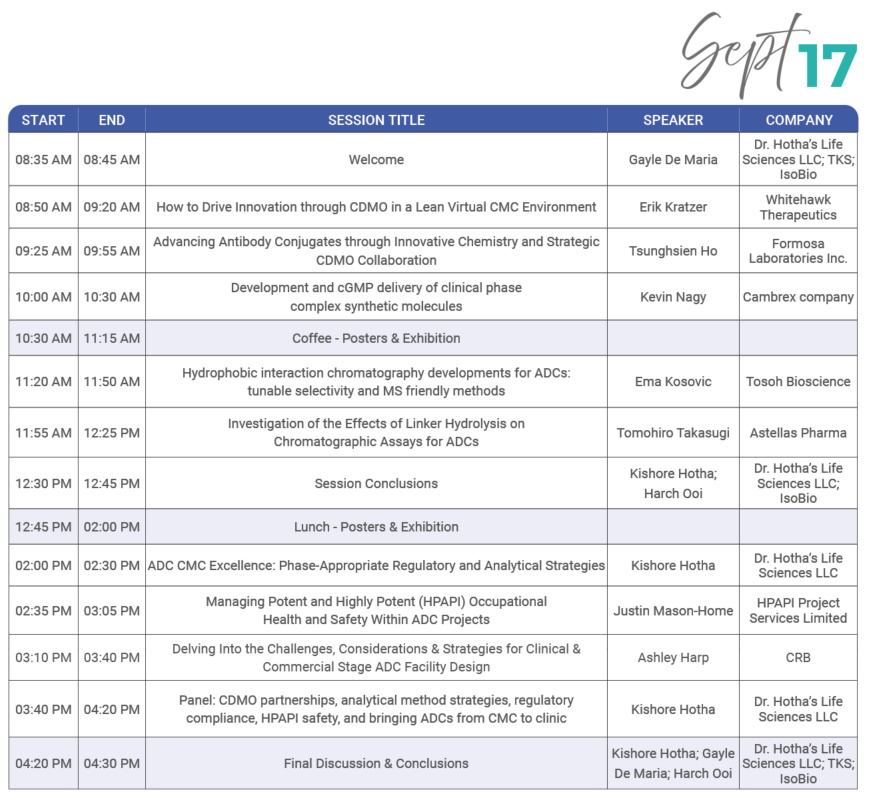
Two days dedicated to discussion and insights into the latest developments in the ADC field, featuring contributions from leading experts and industry professionals.
Explore the full agenda to discover the sessions scheduled for September 16 and 17:

Flavien Susanne, Astrazeneca, VP Chemical development and clinical manufacturing
ADC DL Fast Track: From Development to Manufacturing
Antibody–drug conjugates (ADCs) are transforming the oncology landscape, yet their increasing complexity and rapid demand place significant pressure on traditional development and manufacturing paradigms. This presentation, “ADC DL Fast Track: From Development to Manufacturing,” outlines how AstraZeneca (AZ) is establishing an integrated, end-to-end approach that seamlessly connects early development with scalable manufacturing.
We will explore how AZ is enabling a streamlined “design-to-launch” framework that aligns discovery, process development, analytical characterization, and commercial manufacturing within a unified strategy. By leveraging platform technologies, digital integration, and cross-functional collaboration, AZ is reducing development timelines, enhancing process robustness, and ensuring consistent product quality.
The presentation will highlight key innovations that support accelerated delivery of ADC candidates, including standardized development workflows, scalable conjugation processes, and proactive manufacturing readiness. This holistic model not only addresses the growing global demand for ADCs but also strengthens portfolio agility, enabling rapid progression from clinical development to commercial supply.
Ultimately, this fast-track approach demonstrates how integrated development and manufacturing capabilities can unlock efficiency, de-risk scale-up, and bring life-changing therapies to patients faster.
Krzysztof Brzozka, Ryvu Therapeutics, Chief Scientific Officer and Executive Vice President
Beyond TOP1 and Tubulin: Discovery of Novel Payloads for Next-Generation ADCs
Antibody-drug conjugates have redefined the treatment landscape in oncology, yet the field is converging around a narrow payload toolbox. Most clinical ADCs still rely on microtubule inhibitors or topoisomerase I inhibitors, creating a growing risk of overlapping resistance, predictable toxicity profiles, and diminishing differentiation between programs. As more patients receive ADCs earlier and across multiple lines of therapy, prior payload exposure will increasingly shape response, safety, sequencing and trial design.
Our strategy is to move beyond classical TOP1 and tubulin payloads by developing mechanistically distinct payload classes for next-generation ADCs. The focus is on immunomodulatory and immunocytotoxic payloads: molecules designed not only to kill tumor cells, but also to engage immune biology, support broader activity in resistant settings and create more rational opportunities for combination or multi-payload approaches.
Ryvu brings together first-in-class biology, small-molecule drug discovery, medicinal chemistry, ADC analytics, bioconjugation, pharmacology and translational profiling in one integrated discovery engine. This allows us to move quickly from biological rationale to differentiated chemical matter and ADC-ready payload concepts. Through internal screening, we have shortlisted new payload series, including candidates designed to retain activity in models resistant to established TOP1-based ADCs. We believe the next phase of ADC innovation will require more than simply delivering increasingly potent cytotoxins. Sustained clinical benefit will depend on biologically differentiated payloads that can address resistance, broaden combinability and create new opportunities for antibody-based therapeutics.”
Virginia Metrangolo, Pantarg, Co-founder & CSO
PanTarg: Unlock Pan-Tumor Targeting Beyond Cancer Cells via uPAR targeting ADCs
Antibody–drug conjugates (ADCs) have marked a new era in cancer therapy, yet their potential in treating solid tumors remains constrained, particularly in highly desmoplastic malignancies such as pancreatic ductal adenocarcinoma (PDAC). Most approved ADCs target antigens solely expressed on neoplastic cells, which proves inadequate in the presence of a dense, immunosuppressive stroma that fosters tumor progression, restricts drug penetration, and contributes to therapeutic resistance. To address this challenge, targeting both tumor and stromal components may offer a significant therapeutic advantage. PanTarg is pioneering a novel dual-targeting ADC aimed at the urokinase plasminogen activator receptor (uPAR), which is markedly overexpressed in both tumor and stromal cells of aggressive cancers, especially PDAC, while exhibiting minimal expression in normal tissues. Built on a proprietary uPAR antibody with optimal ADC features, PanTarg’s ADC demonstrates robust anti-tumor efficacy in preclinical models of PDAC and other uPAR-positive tumors across clinically relevant payload classes. Mechanistic studies reveal target-mediated stromal targeting, bystander killing of uPAR-negative tumor cells, and immune-modulatory effects that enhance a more permissive tumor microenvironment, alongside a favorable safety profile. These results validate uPAR as a clinically relevant multi-compartment ADC target, highlighting its promise for advancing next-generation therapies for PDAC and other aggressive uPAR-positive cancers.
Zuzana Antosova, SOTIO Biotech, Director Bioanalysis and Pharmacokinetics
Impact of ADC Stability on Safety and Translation of Preclinical Data into Human PK Prediction: Species Specific Considerations
Antibody–drug conjugates (ADCs) combine targeted antibody delivery with potent cytotoxic payloads, but their clinical performance depends heavily on linker–payload stability. Premature payload release contributes to off‑target toxicity, while insufficient release within the targeted cells reduces efficacy. Species differences in protease activity, FcRn binding, and target expression represent challenges when translating preclinical stability, pharmacokinetics (PK) and toxicity into human outcomes.
Objectives
This work aimed to (1) characterize the impact of ADC stability on safety and PK, (2) evaluate how species-specific biology influences ADC degradation, and (3) propose translational strategies to improve human PK prediction using in vitro data, non-human primates (NHP), and mechanistic modeling.
Methods
Stability and PK profiles of MMAE- and exatecan-based ADCs from SOTIO’s portfolio (SOT106, SOT109) were evaluated using biophysical characterization, in vitro plasma stability assays, and in vivo rodent and NHP PK studies. High Resolution Mass Spectrometry (HRMS) was used to detect drug-to-antibody ratio (DAR) changes. Ligand-Binding Assays (LBA) and Liquid Chromatography-Tandem Mass Spectrometry (LC-MS/MS) quantified Total Ab and Conjugated Ab (ADC) levels and monitored payload loss in plasma samples.
Results
Comparative assessments of conjugated vs. deconjugated drug exposure supported identification of ADC stability and species-specific degradation mechanisms. Moreover, species-specific differences in enzymatic activity, FcRn affinity, and target expression showed that ADC stability, PK and toxicity results must be always interpreted in light of the selected model. Integrating these data enabled the selection of drug candidates with superior stability and PK behavior, and the most favorable safety to efficacy relationship.
Conclusions
ADC stability is a major determinant of both toxicity and translational reliability. NHP and especially rodent species frequently under‑ or overestimate human stability, highlighting the need for considering species-specific differences, the use of human-specific in vitro systems, and mechanistic modeling. Incorporating these elements early in development enhances clinical dose selection and reduces translational risk. Clinical phase I/II studies to investigate SOT106 and SOT109 in sarcoma and colorectal patients, respectively, are in preparation.
Johanna Midelet, Abzena, Director of Bio-Conjugation & Chemistry
ThioBridge® – a site-specific conjugation technology for the design and manufacture of next-generation ADCs
Assessing the role of linker architecture as a key element of ADC design
Discussion of ThioBridge® as a Next-Generation, site-specific conjugation technology for modulation of DAR and production of homogeneous ADCs
Reviewing the use of ThioBridge® conjugation for generating ADCs with improved efficacy
ThioBridge™ is a site-specific conjugation technology designed to offer homogenous drug–antibody ratios (DARs), improved stability and pharmacokinetic profiles by exploiting natural interchain disulfide bonds to generate stable, homogeneous ADCs.
A key advantage of ThioBridge™ is its ability to consistently achieve high conversion to a single DAR species, improving the uniformity of the ADC population. This precision in conjugation supports improved manufacturing reproducibility, superior control over biophysical properties, and the potential for enhanced biological performance. ThioBridge™ also offers versatility and can accommodate a broad variety of payloads, linker architectures as well as flexibility of DAR loading with the potential to generate DAR 2, DAR 4, and DAR 8 formats as well as dual-payloads with defined DARs in a one-step process.
Beyond homogeneity, ThioBridge™ provides improvements in stability. Maleimide derived linkages are prone to deconjugation or exchange reactions in serum, which can diminish efficacy or increase systemic toxicity. In contrast, ThioBridge™ conjugates exhibit resistance to deconjugation and maintain durable attachment under physiological conditions, as demonstrated in 96-hour serum incubation studies.
Overall, ThioBridge® offers a robust, versatile, and clinically validated platform that improves homogeneity, stability, solubility, and manufacturability, enabling next generation ADC designs.
Giuseppina Truglio, University of Siena, Researcher, Department of Biotechnology, Chemistry and Pharmacy
Antibody–Drug Conjugates as Targeted Drug Delivery Systems: Beyond Conventional Cytotoxic Payloads
Although conventional cytotoxic agents remain the most widely used payloads in Antibody-Drug conjugates, their application presents notable limitations, including their restriction to cancer therapy and the significant risk associated with unintended payload release in healthy tissues. The application of less cytotoxic molecules targeting specific receptors, enzymes, or signalling pathways in target cells, represents a significant challenge offering promising opportunities to extend ADC applications beyond oncology.
In the last 12 years, we have been working on the development of ADCs charged with unconventional payloads (1-3), addressing key challenges in their design, synthesis (4-5) and chemical and biological characterisation. We recently developed a Machine Learning method(6) that can predict the drug-to-antibody ratio (DAR) from the chemical structure of the linker–payload system and the monoclonal antibody used. In parallel, we have built up strong expertise in analytical methods for ADC characterisation, including hydrophobic interaction chromatography, spectrophotometry, nuclear magnetic resonance (7) and sodium dodecyl sulfate–polyacrylamide gel electrophoresis (SDS-PAGE). The last findings in the field of ADCs development – including linker and bioconjugation chemistry, as well as stability studies, and in vitro and in vivo activities in cancer and beyond – will be presented.
References:
- Cini, E.; et al. Chem. Sci., 2018, 9, 6490.
- Cianferotti, C.; et al. Chem. Commun., 2021, 57, 867.
- Ricciardella, G.; et al. 2026, 169, 109452.
- Migliorini, F.; et al. Chem. Commun., 2022, 58, 10532.
- Siciliano, S.; et al. Bioorganic Chemistry, 2025, 267, 109260.
- Angiolini, L.; et al. J. Chem. Inf. Model., 2025, 23(23), 5441
- Ghini, V.; et al. Bioconjugate Chemistry, 2026, 37(2), 472.
Sandro Holzer, Lonza, Head of Development Bioconjugates
From Novel Conjugates to IND: Solving Early Phase CMC challenges
The increasing diversity of antibody–drug conjugates (ADCs) and emerging bioconjugate modalities introduces significant earlyphase Chemistry, Manufacturing, and Controls (CMC) challenges. Novel linker chemistries, noncanonical payloads, and alternative conjugation strategies frequently result in clearance liabilities, heterogeneous product distributions, and limited applicability of platform analytics, creating risk for scaleup and IND readiness.
This work describes an integrated earlyphase CMC development approach applied to an innovative antibody–protein conjugate, with the objective of translating benchscale feasibility into a robust, scalable, and INDenabling process. Key development challenges included interference of residual reagents with downstream conjugation, sensitivity of chromatographic separation to operating conditions, and analytical method artifacts arising from nonstandard formulation compositions.
Targeted process development enabled establishment of a reproducible residual clearance strategy compatible with GMP scale, mitigating yield loss and process variability. Chromatographic conditions were systematically optimized to enable controlled separation of conjugate species while reducing scaleup sensitivity. In parallel, fitforpurpose analytical methods were developed to address formatspecific limitations in SECbased purity assessment, enabling reliable characterization, release testing, and stability monitoring.
Collectively, these CMC solutions supported successful GMP manufacture, timely clinical supply, and IND filing. The case study illustrates key principles for derisking early ADC and bioconjugate development through process and analytical design.
Erik Kratzer, Whitehawk Therapeutics, Executive Director of Manufacturing Operations
How to Drive Innovation through CDMO in a Lean Virtual CMC Environment
Antibody–drug conjugates (ADCs) represent one of the most complex therapeutic modalities, combining biologics, highly potent small molecule payloads, conjugation chemistry, advanced analytics, and tightly controlled manufacturing and supply chains. Addressing this complexity in a lean, virtual environment requires a different approach than those taken by larger, brick and mortar developers. Engaging high-quality, experienced CDMOs and CROs committed to achieving your target timelines, budgets and quality parameters are essential.
This presentation covers a practical, experience-based guide for building and advancing ADC programs within a lean virtual CMC environment, utilizing third parties spanning discovery through INDenabling activities. The framework emphasizes defining program objectives early, including quality target product profile, conjugation strategy, analytical requirements, and clinical supply needs, to enable multi-party alignment and parallel execution. A control strategy driven CMC approach is described, linking critical quality attributes, critical process parameters, and analytical methods to support robust process understanding, efficient scaleup, and regulatory readiness.
The virtual operating model positions the sponsor as the system integrator of the ADC value chain. Key enablers include cross-functional and cross-organizational alignment, decisionfocused governance, defined escalation pathways, and performancebased KPIs to manage timelines, quality, and risk across multiple external partners. Phaseappropriate quality systems and close synchronization between sponsor and CDMO quality responsibilities are highlighted as essential to maintaining compliance without constraining early development agility.
Additional discussion addresses ADCspecific considerations, including process development, analytical development, and CMC readiness that’s aligned with pre-clinical, clinical, and regulatory strategies. Considerations are also made for supply chain and logistics approaches associated with potent challenges in global execution. Common technical, quality, and operational risks are reviewed alongside mitigation strategies grounded in proactive planning and integrated oversight.
Collectively, this guide demonstrates how virtual ADC companies can compress timelines, reduce handoffs, and manage complexity by owning integration, quality, and decisionmaking while leveraging bestinclass external execution.
Tsung-Hsien Ho, Formosa Laboratories Inc., Senior Researcher
Advancing Antibody Conjugates through Innovative Chemistry and Strategic CDMO Collaboration
The development of next-generation antibody-drug conjugates (ADCs) and degrader-antibody conjugates (DACs) necessitates a shift toward homogeneity to improve therapeutic indices and manufacturing consistency. While traditional random conjugation via lysine or cysteine often yields heterogeneous mixtures with complex drug-to-antibody ratio (DAR) distributions, innovative site-specific bioconjugation chemistries are overcoming these limitations. One such approach is a streamlined glycosite-specific transglycosylation platform utilizing LacNAc-derived 4,6-acetal glycosyl donors, which can be synthesized in just two steps to enable efficient conjugation at the conserved Fc N297 site. These donors produce highly homogeneous antibody conjugates that exhibit enhanced resistance to enzymatic hydrolysis and demonstrate potent, target-selective cytotoxicity in both in vitro and in vivo models. Complementing these enzymatic methods are site-selective chemical modification platforms, such as Formosalabs Select and Tripartite Therapeutics, which use specialized reduction agents and hydrophilic linkers, such as Polarpeutic®, to achieve uniform DAR profiles and superior plasma stability compared to industry benchmarks. Translating these complex chemistries into clinical assets requires an integrated CDMO collaboration model that provides a comprehensive platform for screening and development without extensive antibody engineering. By combining the multidisciplinary expertise of biotech innovators like Honeybear Biosciences with the production capabilities of a strategic partner, this collaborative approach facilitates the realization of next-generation modalities, including bispecific, radionuclide, and dual-payload ADCs designed to effectively combat drug resistance.
Kevin Nagy, Snapdragon Chemistry, a Cambrex company, Senior Director of Engineering
Development and cGMP delivery of clinical phase complex synthetic molecules
The delivery of complex conjugated molecules present challenges across analytical method development and testing, process development, and manufacturing. Particularly for early deliveries of clinical stage materials, successful deliveries require close partnerships between CDMOs and sponsor companies.
Analytical characterization of raw materials, intermediates, and products can be quite complex; unlike small molecule APIs, traditional HPLC methods are frequently insufficient to fully resolve all of a product’s critical quality attributes. Instead, the deployment of analytical techniques such as size exclusion chromatography (SEC), quantitative NMR, or dynamic light scattering (DLS) may be necessary to understand the product’s structure and properties.
Manufacturing processes for these materials can also require the integration of complex reaction chemistries, such as highly precise polymerizations or step-by-step dendrimer synthesis to produce the scaffolds prior to incorporation of the product warhead. Once synthesized, these fragile molecules can additionally require significant and complex purification technologies, such as organic solvent tangential flow filtration (TFF), wiped film evaporations, and lyophilization.
At Snapdragon, we have successfully developed numerous molecules in this area for our clients while delivering cGMP materials to support the advancement of their pipelines. In this presentation, we will share 1-2 case studies in the synthesis of functionalized dendrimers, polymers, and ADCs highlighting some of these challenges and the technical solutions that were developed on behalf of our clients.
Ema Kosovic, Sales Manager – Process EMEA, Tosoh Bioscience
Hydrophobic interaction chromatography developments for ADCs: tunable selectivity and MS friendly methods
Characterizing antibody–drug conjugates (ADCs) is complicated by the large variability in linker–payload chemistries, which produces wide differences in hydrophobicity, drugtoantibody ratio (DAR) distributions, and variant profiles. These structural differences challenge traditional hydrophobic interaction chromatography (HIC), while the high salt concentrations required for HIC retention prevent direct mass spectrometric (MS) identification. Here, we address these limitations through coordinated advances in stationary phase design and mobile phase engineering.
First, we evaluated conventional and modern HIC stationary phases using a representative panel of FDAapproved and clinicalstage ADCs selected to span a broad range of linker–payload hydrophobicities and DAR distributions. This set included cysteineconjugated ADCs bearing highly hydrophobic auristatin payloads (DAR ~4), ADCs conjugated with moderately hydrophobic DNAcrosslinking payloads at lower DAR (~2), as well as ADCs carrying more polar topoisomerase I inhibitors at higher DAR (~8). Across these diverse modalities, modern HIC phases provided robust, highresolution separations and reproducible DAR quantification, including improved resolution of highDAR species and lowabundance intermediate DAR variants.
Second, these chromatographic advances were combined with targeted method and mobilephase development to establish a rapid native HIC workflow with enhanced MS compatibility. This approach was evaluated on a complementary set of ADCs representative of conjugation strategies commonly used in process development and manufacturing, including interchain cysteine, engineered cysteine, and lysine conjugation with defined DARs. The use of ammonium tartrate enabled separations comparable to ammonium sulfate while supporting fast, processanalyticaltechnology (PAT)compatible analyses and native MScompatible workflows.
Together, these results establish a highresolution, MScompatible HIC platform that addresses the analytical challenges posed by linker–payload variability and highsalt constraints, enabling comprehensive ADC characterization for both analytical development and inprocess monitoring applications.
Tomohiro Takasugi, Senior Researcher, Astellas Pharma
Investigation of the Effects of Linker Hydrolysis on Chromatographic Assays for ADCs
Antibody-Drug-Conjugates (ADCs) have been major in recent drug developments. The payload linker conjugated with antibody mainly contributes to efficacy and safety of ADC. Drug-to Antibody Ratio (DAR) is one of the most important critical quality attributes (CQAs) and should be well controlled during manufacturing and storage. However, when the measurement of DAR was performed after sample storage, the chromatographic profile after sample storage was more complex than that before sample storage and it was difficult to analyze precisely the chromatogram of the sample after storage. It has been reported that the succinimide ring in cysteine conjugated ADC can be opened by hydrolysis depending on the linker structure (Lyon et al., 2014); therefore, we hypothesized that the observed chromatographic changes in the stored samples were caused by linker hydrolysis rather than actual changes in DAR.
In this study, ADC samples stored under thermal stress conditions were comprehensively characterized using various analytical techniques including LC-MS peptide mapping for quantification of linker hydrolysis. The LC-MS results showed that the extent of linker hydrolysis increased with storage. Further characterization demonstrated that payloads were not released from the ADC and the DAR remained unchanged. In addition, the characterization indicated that hydrolysis did not occur at specific conjugation sites but occurred randomly. This random hydrolysis increased the structural heterogeneity of ADC, resulting in more complex chromatographic profiles.
These findings show that characterization of ADCs using orthogonal analytical techniques is essential to appropriately interpret changes observed in conventional assays and to ensure reliable CQA evaluation.
Kishore Hotha, Dr. Hotha’s Life Sciences LLC, President
ADC CMC Excellence: Phase-Appropriate Regulatory and Analytical Strategies
Antibody-drug conjugates sit at the intersection of large- and small-molecule development, and their heterogeneity — variable drug-to-antibody ratio, linker-payload chemistry, charge distribution, and process-related impurities — makes CMC strategy uniquely demanding. The guiding principle of this presentation is simple: analytical rigor should match your knowledge of the molecule, and that knowledge grows as the program advances.
This session lays out a practical framework for phase-appropriate ADC development from Pre-IND through BLA. It begins with risk-based CQA identification using FMEA and a tiered control strategy that directs analytical investment where safety and efficacy demand it. It then traces how specifications and methods should evolve intentionally across phases — from conservative, fit-for-purpose Phase 1 approaches to full ICH Q2(R2) validation at commercial readiness — with particular attention to ADC-specific challenges in DAR distribution, potency, charge variants, and impurity control, including decision-tree logic for linker-drug intermediates and small-molecule degradants.
Finally, the talk addresses the most common and costly failure mode in ADC programs: designing analytical methods and specifications without CDMO tech transfer in mind. Drawing on the R³ (Recognize, Relate, Resolve) model of biotech–CDMO collaboration, it makes the case for building transferability, comparability, and submission narrative into the strategy from Day 1.
Justin Mason-Home, HPAPI Project Services Limited, Director/Owner
Managing Potent and Highly Potent (HPAPI) Occupational Health and Safety Within ADC Projects
ADC projects bring together the science pillars of biology and chemistry, to take small molecule chemical toxicants (payloads), some of which are the most potent and toxic in the history of biopharma and which are too toxic to give to a patient directly, and conjugate them to a ‘biological’ targeting moiety which can deliver an exquisitely targeted dose directly to a disease location whilst avoiding off-site toxicity. This is all very good for the patient, but handling [highly] potent and toxic active (bio)pharmaceutical ingredients (APIs) presents a significant risk to worker health and safety. APIs are much more hazardous than ‘regular’ hazardous substances used in other manufacturing industries.
Laws of the world require companies to understand hazards and risks and then put in place controls that are proportionate to the risk.
Justin Mason-Home will present key elements and strategic management of occupational health and safety within ADC projects, including
ADC project fundamentals – Hazard (toxicology), Risk Assessment and Control (and Containment)
Getting the big things right using systematic science, not ‘emotional positioning’
Project, process and facility design matters on the ‘macro’ (facility level) and ‘micro’ (process and control/containment) scales
HPAPI management systems and managing workers in high-risk, uncertain and sometimes high-concern environments
The talk will be business-focussed and present strategies for making good business decisions based on robust and defensible science (and law), with the objective of investing well, designing well, getting the big things right and putting in place potent drug safety management systems that protect workers, managers, executives and shareholders. Bring you hardest questions along!
Ashley Harp, CRB, Fellow in Containment & Bioconjugation
Delving Into the Challenges, Considerations & Strategies for Clinical & Commercial Stage ADC Facility Design
As the ADC field matures and more candidates are moving out of the development space into manufacturing scale than ever before, understanding how best to design and utilize manufacturing facilities has never been more crucial.
Equipment & facility design expert from CRB will provide a deep dive into containment challenges, key design considerations, and best strategies to efficiently and effectively implement engineered solutions.
Highlights include:
Delving into the challenges of scaling up ADC manufacturing from bench to commercial scale.
Discussing the impacts that development teams have on manufacturability of ADCs.
Exploring how facility engineering teams are overcoming challenges across material handling, waste handling, sustainability in multi-product facilities.
Posters
1 Melissa Besenius, Sanofi
Disulfide monitoring and site-specific conjugation of therapeutic proteins
Site-specific conjugation represents a critical advancement in bioconjugate therapeutics, offering improved homogeneity and therapeutic index over conventional random conjugation methods. For cysteine-containing proteins, precise monitoring of disulfide bond formation and subsequent site-specific conjugation are essential to developing robust manufacturing processes.
In this work, we demonstrate the feasibility of redox measurements as an effective strategy to monitor disulfide bond formation prior to conjugation. Conjugation efficiency was further assessed by HPLC, providing a quantitative evaluation of the bioconjugation process. Together, these analytical approaches enable comprehensive process monitoring from disulfide bond formation to final conjugate characterization.
Although the target protein is not an antibody, this work highlights the broader applicability of site-specific conjugation combined with robust redox monitoring. This integrated strategy offers enhanced precision and reproducibility in therapeutic protein modification, and could pave the way for next-generation antibody-drug conjugates and bioconjugate therapeutics
2 Eóin Bourke, APC Ltd
Development of a Platform Approach for Continuous ADC Conjugation Process Manufacturing
The increasing complexity and diversity of antibody-drug conjugate (ADC) pipelines continue to drive interest in innovative manufacturing approaches that enhance process robustness, scalability, and operational efficiency. Continuous processing offers the potential to address several challenges associated with traditional batch manufacturing; however, successful implementation requires careful integration of reaction engineering, process control, equipment design, and manufacturability considerations.
This poster presents the development of a continuous-flow platform for ADC conjugation intended to support multiple pipeline molecules through a flexible and scalable manufacturing strategy. The work focused on establishing an engineering framework for continuous conjugation processing, incorporating computational modelling, reactor design, scale-up assessment, equipment selection, automation, and process control principles.
Key activities included modelling of mixing performance to evaluate different reactor configurations, assessment of scale-up strategies and residence time distribution considerations, and development of a manufacturing-oriented flow skid architecture suitable for technology transfer and future GMP implementation. Particular emphasis was placed on process robustness, operational flexibility, material compatibility, automation, in-line monitoring, and approaches to cleaning and system readiness.
The poster will discuss the methodology used to transition from proof-of-concept studies toward a scalable continuous manufacturing platform, highlighting engineering challenges, development considerations, and lessons learned during platform advancement. The presented framework demonstrates how continuous processing principles can be applied to ADC conjugation workflows and provides insight into strategies for future implementation of integrated continuous bioconjugation manufacturing processes.
3 Serghei Chercheja, Sylvain Blanc, Florent Beaufils – SpiroChem
Discovery Platform for Novel Human Tumour-Associated Proteases and Linkers
Protease-cleavable linkers are key enabling technologies for ADCs.1 However, the current generation of linker technologies relies on a limited number of well-characterized proteases, restricting opportunities for tumour-selective payload release across diverse cancer indications.2 To address this challenge, SpiroChem has established a discovery platform focused on the identification of novel human tumour-associated proteases and the development of corresponding cleavable linker sequences.
The platform integrates protease target selection, substrate design, and experimental screening to identify enzyme–linker pairs with favourable cleavage characteristics. By expanding the repertoire of tumour-associated proteases and their preferred substrates, the platform aims to enable the development of next-generation linker technologies with improved selectivity and broader applicability in targeted drug delivery.
This poster presents the concept, workflow, and initial experimental results generated using the platform. A panel of linker candidates was synthesized and evaluated against multiple human proteases relevant to the tumour microenvironment. Cleavage activity was assessed using fluorescence-based assays, allowing quantitative comparison of linker susceptibility and enzyme specificity. The resulting data reveal distinct cleavage profiles across different protease–substrate combinations and demonstrate the ability of the platform to identify linkers with selective enzymatic activation.
The presented results highlight the potential of systematic protease and substrate profiling to uncover novel enzyme–linker pairs suitable for therapeutic applications. Such linker technologies may support more precise drug release within tumour tissues, thereby improving therapeutic efficacy while reducing off-target toxicity. By creating a growing database of tumour-associated proteases and validated cleavable linker sequences, the SpiroChem Discovery Platform provides a foundation for the development of innovative targeted therapies and future collaborations in oncology drug discovery.
References
- S. Li, Y. Guo, J. Che, H. Dai, X. Dong, J. Med. Chem. 2025, 68, 19, 19871–19892
- M. Vizovisek, D. Ristanovic, S. Menghini, M. G. Christiansen, S. Schuerle, Int. J. Mol. Sci. 2021, 22, 2514.
4 Harry Christodoulou, Niall Brady, Dr. Marco Quaglio, Samuel Andersson, Dr. Franco Klingberg, Antonio Benedetti – PolyModels Hub Ltd
From Conjugation to Purification: A Model-Informed Development Framework for ADC Process Development
Antibody–drug conjugate (ADC) development presents process-development challenges that extend well beyond those encountered for conventional monoclonal antibodies. High payload hydrophobicity, aggregation, precipitation, heterogeneous drug-to-antibody ratio distributions, and limited availability of cytotoxic material create tightly coupled process behaviours that are difficult to understand through empirical experimentation alone. Despite this complexity, process development is still largely performed as a sequence of isolated unit-operation studies, resulting in extensive experimentation and fragmented process knowledge.
We present a model-informed development framework for ADC process development that connects mechanistic models, targeted experimentation, and digital workflows into a unified representation of the manufacturing process. Mechanistic models describing conjugation, ultrafiltration/diafiltration (UF/DF), hydrophobic interaction chromatography (HIC), and polishing operations are linked into an end-to-end digital twin capable of propagating upstream variability through the downstream process and predicting its impact on final product quality.
Rather than replacing experimentation, the framework uses mechanistic understanding to identify the minimum set of informative experiments required to calibrate and validate each model, substantially reducing material consumption while increasing process understanding. Once calibrated, the connected process model supports global sensitivity analysis, multivariate design-space definition, process characterization, control-strategy development, and scale-up using a single reusable model base.
The models are delivered through reusable digital workflows that combine simulation, experimental guidance, and data management into structured development activities suitable for multidisciplinary CMC teams, and are implemented within ModelFlow to support model reuse and traceability across the development lifecycle.
Rather than developing isolated digital models for individual unit operations, this framework creates a connected digital representation of the complete ADC downstream process that can be reused from early development through characterization, scale-up, and technology transfer.
5 Laura LE BRETON, Seripharm, an Axplora company
Axplora’s efficient and clever dual payload cleaning control strategy for multipurpose bioconjugation vessels
Axplora leverages readily available multipurpose glass and stainless-steel vessels for ADC manufacturing. To address the need for cross-contamination control, a highly efficient two-step cleaning strategy has been established, starting with chemical cleaning to remove highly potent residual payload, followed by biological cleaning to eliminate residual ADC and reduce microbial load.
The emergence of dual payload ADCs has led to rethinking the development of the chemical cleaning methods, managing residual payloads with different nature, structure, solubility, stability profiles and toxicity. The cleaning method must therefore be selective, sensitive, repeatable and accurate for both distinctive payloads.
A chemical cleaning method was successfully developed and validated for the control of residual payloads of a different nature – specifically auristatin- and exatecan-based – on various surfaces using both rinsing and swabbing techniques. With OELs as low as 0.005 μg/m3 and varied stability in the vessel cleaning solvent, this challenging validation paves the way for the safe and efficient implementation of multipurpose vessels in dual-payload ADC manufacturing, while ensuring robust cross-contamination control.
6 Chia-Ling Shih, Formosa Laboratories, Inc.
Integrated Site-Selective and Site-Specific Conjugation Technologies for Next-Generation Homogeneous Antibody-Drug Conjugates
The development of next-generation antibody-drug conjugates (ADCs) and degrader-antibody conjugates (DACs) is driving the adoption of homogeneous conjugation technologies to improve therapeutic index, stability, and manufacturability. Conventional lysine- or cysteine-based conjugation often generates heterogeneous drug-to-antibody ratio (DAR) distributions, limiting product consistency and clinical translation. Site-specific glycan conjugation technologies, including HoneyBear Biosciences’ CoNectar™ platform, enable precise Fc glycan modification without antibody engineering, producing homogeneous ADCs with fixed DAR and enhanced stability. Complementing this approach, Formosalabs Select and Tripartite Therapeutics employ site-selective conjugation with proprietary reduction chemistry and hydrophilic Polarpeutic® linkers to generate enriched DAR2 or DAR4 ADCs with improved plasma stability. Together, these complementary technologies support the development of advanced modalities, including dual-payload, bispecific, radionuclide, and degrader-antibody conjugates. Preclinical studies demonstrated that eribulin-based trastuzumab ADCs achieved 5.6- to 500-fold greater in vitro potency than Kadcyla, together with superior in vivo antitumor efficacy. By integrating innovative conjugation technologies with end-to-end CDMO capabilities, Formosa Laboratories and its strategic partners provide a comprehensive platform to accelerate the development and manufacturing of next-generation targeted therapeutics.

Becoming the “Customer of Choice”: A Strategic Imperative for CDMOs an...

Intelligence Amplified: A CDMO Perspective on Integrating R&D and...
Deriving health-based exposure limits for highly potent APIs: from reg...

HPAPI Management: From Categorization to Prevention – Practical...

Scaling, Adapting and Partnering: How Europe’s Chemical Sector Can Sta...

Regulatory affairs as the connective tissue of pharmaceutical product...

Advancing Antibody–Peptide Conjugates Through Controlled Conjugation a...

Baxdrostat (Baxfendy)