Introduction
Within the fields of chemistry and pharmaceuticals, claims are frequently formulated to safeguard a range of chemical substances instead of solely an individual identified molecule. Markush formulae, which consist of generic structures with variable positions defined by lists of alternative substituents and, when applicable, negative limitations, serve as the prevailing mechanism. The compression of a potentially vast combinatorial set into a single claim has been demonstrated to provide broad protection and to frame competition analyses, such as freedom-to-operate and patent landscaping. (15, 16, 17, 20)
Nevertheless, the same drafting choices that maximize scope may strain the EPC framework, which integrates substantive requirements with procedures intended to maintain the manageability of searches and examinations. Markush claims, therefore, attract unity objections and additional search fees. They also give rise to disputes on support and sufficiency of disclosure across the full range. Furthermore, they give rise to detailed debates on whether a particular compound or sub-genus is disclosed, selected, or merely encompassed. (1, 2, 6, 7).
Searching for Markush formulae
A considerable portion of the chemically relevant information is initially disclosed in patents and subsequently in scientific papers. Moreover, chemical patent claims often encode not only individual molecules but also extensive chemical spaces. In this context, Markush structures have become a prevalent drafting tool.
They express a generic chemical scaffold in conjunction with sets of alternative substituents (see Figure 1). This enables applicants to claim a family of related compounds without enumerating each member (1,3). From the standpoint of patent information retrieval, Markush claims are designed to be compact representations of potentially enormous combinatorial spaces. These patents may encompass a multitude of variable positions, variable numbers of substituents, variable bond types, and conditional restrictions. Consequently, patent information retrieval is technically demanding and different patents may define partially overlapping areas that are not visually or textually obvious, even to expert readers. (15, 16, 17, 18, 19)
A patentability search may be conducted in public patent sources, although it is recommended that such a search be performed in specialized commercial databases, which are known to be more complete than public sources (21).
A patent search should be carried out not only in regard to patent applications but also in granted patents because the claimed formulae can be subject to change as a result of the examination stage (see Figure 2).
The inherent complexity of Markush searching renders it a critical yet arduous endeavor. This is due to the necessity of meticulous scrutiny to assess novelty and inventive step, ascertain freedom to operate, and delineate competitive landscapes. (1, 2, 6, 19)
Patentability under the EPC
Novelty (overlapping Markush formulae) and inventive step remain the primary patentability requirements that are subject to challenge during opposition proceedings.
Decisions can be searched and downloaded from the EPO website using a keyword search. (22)
The ensuing paragraphs will provide a comprehensive examination of the aforementioned requirements and conditions, encompassing clarity, unity of invention, sufficiency of disclosure, and added matter.
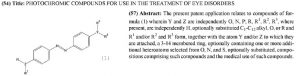
Figure 1. Abstract of the PCT patent application No. WO 2019/234567 A1. The Markush formula (1) encompasses a substantial quantity of compounds, contingent upon the value of the substituents.
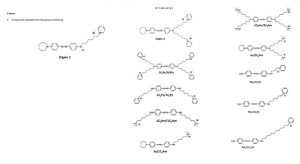
Figure 2. List of compounds claimed in the European granted patent No. EP 3802491 B1. The following list comprises a selection of compounds derived from the formula (1) of WO 2019/234567 A1.
Clarity and conciseness (art. 84 EPC)
Article 84 EPC establishes that claims must be formulated in a manner that is clear and concise, with substantiation derived from the description. (1) Markush formulae are frequently the subject to criticism due to the complexity introduced by nested lists and exclusions, which can increase the interpretative burden.
In T 1020/98 (OJ EPO 2003, 533), however, the Board determined that complexity is not synonymous with unclarity. The fundamental question is, therefore, whether the skilled person can determine the claim boundary unambiguously. This is a separate issue from the question of whether coverage can be assessed quickly. (5)
In T 1020/98, the Board’s decision offers a valuable lesson on the art of concise patent drafting. A Markush formula can provide a concise definition of a chemical class, whereas forced enumeration of increasingly specific variants may yield a longer and less clear claim set.
This matters where applicants introduce disclaimers to restore novelty; although disclaimers must comply with clarity and added-matter constraints, conciseness is not judged on the premise that fewer words are always preferable. (10)
Unity of invention (Article 82 EPC; Rule 44 EPC; PCT Rule 13)
The unity of invention issue arises when a single Markush claim encompasses multiple alternatives. In accordance with the provisions stipulated by the Patent Cooperation Treaty (PCT) and the European Patent Convention (EPC), the concept of unity is contingent upon a singular, overarching inventive concept, in addition to a discernible technical relationship between alternatives. (1) In the case of W 3/94 (OJ EPO 1995, 775), the Board applied the PCT Administrative Instructions on Markush practice, thereby establishing a precedent. The Board’s decision was based on the principle that unity may be accepted where alternatives are “of a similar nature” in the problem-solution sense, typically supported by a common property or activity. (6) Unity does not depend on whether alternatives manifest as discrete claims or within a unified Markush definition. (1, 2, 6).
Subsequent practice has demonstrated the necessity of reevaluating unity a posteriori, that is, subsequent to the consideration of relevant prior art. In such circumstances, a mere allegation of common activity may not be sufficient, as the closest prior art may undermine the assumption of similar behavior across the class. Consequently, applicants should be able to identify a structurally meaningful commonality that credibly underpins the alleged activity in view of that art. As demonstrated in W 4/96 (OJ EPO 1997, 552), this dynamic is exemplified in the context of Markush-type alternatives. (1, 2, 7).
Consequently, the application’s provision of a credible common technical problem and effect across the claimed alternatives, as well as an identifiable structural commonality that is functionally linked to that effect, facilitates a coherent search strategy and reduces the likelihood of additional search fees, thereby increasing unity robustness. (1, 2, 6, 7)
Novelty and selection inventions (Article 54 EPC)
The novelty of Markush formulae is assessed under Article 54 EPC using a species-based logic. In other words, the disclosure of a single compound that falls within the claimed Markush definition and which is enabled by prior art, anticipates the claim. The practical task at hand is to map out the prior art structure and determine whether it can be reconstructed through permissible selections within the claim. (1, 3, 4).
A more challenging scenario would be that of partial overlap between two generic disclosures. The prevailing practice of EPO (European Patent Office) examination does not generally regard an abstract area of overlap between two Markush formulae as a factor that destroys novelty, unless the prior art provides a direct disclosure of specific subject matter in that overlap. The “two-list principle” is a term coined to encapsulate this concept within the Guidelines. According to this principle, in the event that the composition of the claimed combination is determined by selections from two or more lists, novelty is acknowledged in the absence of a pointer to that combination. (1, 2, 3).
The training materials for EPO examiners on novelty in chemical inventions operationalize these concepts by distinguishing between two scenarios: (i) anticipation by an explicitly disclosed species and (ii) non-anticipation, where the alleged overlap is determined by multiple independent selections. It is also noted that a narrower exception exists: in instances where the prior art already provides a single list that directly offers the decisive alternative, in which case a single selection may be treated as an explicit disclosure. (3, 4).
Selection-invention case law underscores that the pivotal inquiry pertains to whether the prior art renders the selected subject matter accessible to the public in a manner that is both unambiguous and enabling.
In the case of T 198/84 (OJ EPO 1985, 209), the criteria for selected sub-ranges were developed. Subsequent jurisprudence and the Guidelines have placed emphasis on pointer analysis and the direct-and-unambiguous disclosure test for multiple selections. T 929/00 applies the same disclosure-centric reasoning to complex chemical and formulation subject matter. (1, 2, 13, 14, 20)
Inventive step (art. 56 EPC)
The breadth of the Markush structure has also been demonstrated to influence inventive step under Article 56 EPC. In instances where inventiveness is contested on the basis of a technical effect, the EPO anticipates that said effect must be credibly achieved across the claimed scope. In the case of T 939/92 (OJ EPO 1996, 309), the proposition that a purported technical effect constitutes the sole basis for non-obviousness is frequently cited. In such instances, it is posited that a substantial proportion of the claimed compounds must be capable of exhibiting said effect. In the absence of such plausibility, it is not possible for the problem-solution analysis to be applied to the claim in its entirety. (1, 2, 11)
In the context of patent selection inventions, the question of inventive step often becomes the primary point of contention once the novelty of the invention is established by the absence of a prior art reference. It is incumbent upon applicants to ensure that the application contains comparative data or, at the very least, a technically credible rationale that links the selected structural features to the asserted advantage. Representative examples and structure-activity or structure-property discussion substantively strengthen broad Markush positions. (1, 2, 20)
Sufficiency of Disclosure (art. 83 EPC)
According to Article 83 of the European Patent Convention (EPC), a patent application is required to disclose the invention in a manner that is sufficiently clear and complete for a skilled person to carry out the invention over the entire scope claimed. Concerns regarding sufficiency arise in the context of Markush claims, particularly when the claim encompasses a substantial number of variants. Nevertheless, the description provides only limited synthetic guidance or data, resulting in a deficiency in substantiation (1, 2).
EPO practice does not necessitate the exemplification of every claimed compound; however, the skilled person must be capable of preparing the majority of the claimed embodiments without undue burden, utilizing the disclosure and common general knowledge. In instances where claims are supported by functional or property-based definitions, justifications for extensive structural variability must be substantiated by the description. This description is expected to provide technically credible teaching that enables the skilled individual to identify and obtain working variants without the necessity of an overly extensive research program (1, 2).
In Markush cases, sufficiency of disclosure and inventive step are frequently intertwined. The broader the genus, the more the argument depends on a technical effect, and the more the disclosure must substantiate that the effect is achievable across the claim scope (1, 2, 11).
Added matter and priority [Articles 87-88 and 123(2) EPC]
Amendments and priority are known to trigger the strictest application of the disclosure-based approach. According to Article 123(2) EPC, amendments are required to be directly and unambiguously derivable from the application as filed. This “gold standard” was confirmed in G 2/10 (OJ EPO 2012, 376) (9). In the context of Markush prosecution, the most prudent approach entails the reduction of lists, a strategy that is most effective in cases where it merely diminishes the scope without engendering an undisclosed selection. Disclosing disclaimers, in this regard, is obligated to meet the criteria for admissibility as delineated in G 1/03. (1,2, 9, 10).
The case of Decision T 615/95 offers a paradigmatic illustration of the admissibility of a particular procedure. The deletion of one meaning from each of several independent lists did not result in the individualization of a new compound or sub-group. Rather, it merely led to a reduction in the size of the originally disclosed class. Conversely, in the event that the application provides no pointer to a specific combination, multiple deletions that converge on said combination may prove unsuccessful. (1, 2, 12)
Priority under Articles 87-88 EPC employs the same disclosure logic. In G 2/98 (OJ EPO 2001, 413), the Enlarged Board established that the concept of priority is applicable exclusively to the “same invention,” thereby signifying subject matter that is directly and unambiguously disclosed in the priority document. (8) Therefore, the mere presence of prior generic wording in a document is typically inadequate to establish priority for a subsequent selection, unless the earlier filing explicitly discloses the subject matter to be selected and its distinguishing features. (2, 8)
Practical drafting and prosecution implications
The aforementioned analysis supports several practical conclusions for applicants drafting and prosecuting Markush claims before the EPO (1,2).
It is essential to define variables with discipline, avoid unnecessary nesting, and maintain unambiguous boundaries for each alternative. In the event that exclusions are required, it is necessary to ensure that the disclaimer strategy remains compatible with the added-matter and clarity framework.
The incorporation of internal pointers within the description is of paramount importance. These pointers should include preferred residues, exemplified subgenera, and explicit fallback positions. This approach will ensure that subsequent restrictions can be implemented without the creation of undisclosed selections.
In order to substantiate the technical effects across the claimed breadth, a credible rationale and representative experimental evidence must be provided, particularly in cases where inventive step depends on a specific advantage over the closest prior art.
Conclusions
Markush formulae are an established drafting device under the EPC, but their breadth routinely generates unity, clarity, novelty, sufficiency, amendment, and priority frictions. The resolution of these frictions is achieved by the Guidelines and case law through a single lens, namely the manner in which the skilled person derives directly and unambiguously from the relevant disclosure. The efficacy of the practice is contingent upon the establishment of disciplined variable definitions, the disclosure of fallback positions, and the presence of an evidential basis that substantiates any asserted technical effect across the intended scope.
References and notes
- European Patent Office (EPO). Guidelines for Examination in the European Patent Office. April 2025 edition. Available at: https://www.epo.org/en/legal/guidelines-epc
- European Patent Office (EPO). Case Law of the Boards of Appeal of the European Patent Office. 11th edition (2025). Available at: https://www.epo.org/en/legal/case-law
- European Patent Office (EPO). Learning path for patent examiners: Novelty, Entry level. Version: May 2024. Available at https://link.epo.org/elearning/TmfbCwm
- European Patent Office (EPO). Assessment of novelty: chemical inventions, Intermediate level. (e-learning material). Available at: https://link.epo.org/elearning/TCltWaF
- European Patent Office, Technical Board of Appeal 3.3.1. T 1020/98 (Safeners/BAYER), 27 June 2003. OJ EPO 2003, 533. Available at: https://www.epo.org/en/boards-of-appeal/decisions/t981020ep1
- European Patent Office, Technical Board of Appeal 3.3.1. W 3/94, 15 December 1994. OJ EPO 1995, 775. Available at: https://www.epo.org/en/boards-of-appeal/decisions/w940003ep1
- European Patent Office, Technical Board of Appeal 3.3.2. W 4/96, 20 December 1996. OJ EPO 1997, 552. Available at: https://www.epo.org/en/boards-of-appeal/decisions/w960004ex1
- European Patent Office, Enlarged Board of Appeal. G 2/98, 31 May 2001. OJ EPO 2001, 413. Available at: https://www.epo.org/en/boards-of-appeal/decisions/g980002ex1
- European Patent Office, Enlarged Board of Appeal. G 2/10, 30 August 2011. OJ EPO 2012, 376. Available at: https://www.epo.org/en/boards-of-appeal/decisions/g100002ex1
- European Patent Office, Enlarged Board of Appeal. G 1/03 (Disclaimer/PPG), 8 April 2004. OJ EPO 2004, 413. Available at: https://www.epo.org/en/boards-of-appeal/decisions/g030001ex1
- European Patent Office, Technical Board of Appeal 3.3.1. T 939/92 (Triazoles/AGREVO), 12 September 1995. OJ EPO 1996, 309. Available at: https://www.epo.org/en/boards-of-appeal/decisions/t920939ex1
- European Patent Office, Technical Board of Appeal. T 615/95 (Acridinium esters/CIBA CORNING), 16 December 1997. Available at: https://www.epo.org/en/boards-of-appeal/decisions/t950615eu1
- European Patent Office, Technical Board of Appeal. T 198/84 (Selection invention), 28 February 1985. OJ EPO 1985, 209. Available at: https://www.epo.org/en/boards-of-appeal/decisions/t840198ep1
- European Patent Office, Technical Board of Appeal. T 929/00 (Detergent component/UNILEVER), 26 February 2004. Available at: https://www.epo.org/en/boards-of-appeal/decisions/t000929eu1
- Simmons ES. Markush structure searching over the years. World Pat Inf. 2003; 25:195 – 202. doi: 10.1016/S0172-2190(03)00073-5.
- Cielen E. Searching Markush formulae directed to medical applications. World Pat Inf. 2009; 31:178-183. doi: 10.1016/j.wpi.2008.10.004.
- Wagner S, Sternitzke C, Walter S. Mapping Markush. Res Pol. 2022; 51:104597. doi: 10.1016/j.respol.2022.104597
- Sun P, Liu X, Li X, Wang B, Yi X, Tang Z. Understanding Markush Structures in Chemistry Documents with Deep Learning. Proc. IEEE BIBM. 2018: 1126-1129.
- World Intellectual Property Organization (WIPO). Markush searches in PATENTSCOPE (guidance document). Available at: https://www.wipo.int/documents/d/patentscope/docs-en-markush-searches.pdf
- Gonzalez Hernandez R. Patentability of Markush Formulas and Selection Inventions. Revista Cubana de Farmacia. 2024;57. https://revfarmacia.sld.cu/index.php/far/article/view/1082
- Barbieri, M. Searching for patent information on chemical compounds using open access public sources. Chem. Today 2025; 43(6): 60-63.
- Barbieri, M. Patentability of polymorphic compounds: an analysis based on recent EPO decisions. Chemistry Today 2026; 44(2): 67-11

The Renaissance and Industrial (r)Evolution of Peptide and Oligonucleo...

Empowering the Full Lifecycle of Drug Development

Europe’s Critical Medicines Act: A Test of Health Sovereignty—and Indu...

The data beneath the disruption: why process maturity and data account...

Linerixibat (Lynavoy)

Science is not enough: the operational disciplines of venture capital...

Industry 5.0-Ready Laboratories: Beyond Automation Towards Human-Centr...
From trial-and-error to predictive intelligence: How bespark*bio is re...